
- All
- Product Name
- Product Keyword
- Product Model
- Product Summary
- Product Description
- Multi Field Search
Views: 0 Author: Site Editor Publish Time: 2026-03-07 Origin: Site



If you want a low-impact workout that targets your whole body, a standard elliptical machine stands out among cardio equipment. Check out how these machines stack up for popularity and usage:
Equipment Type | Popularity Rank | Usage Rate Description |
|---|---|---|
Treadmills | 1 | Dominates the market with widespread use in gyms and homes |
Elliptical Machines | 2 | Gaining popularity due to low-impact workouts |
Exercise Bikes | 3 | Commonly used but less popular than treadmills and ellipticals |
Rowing Machines | 4 | Less common but effective for full-body workouts |
You’ll love using an elliptical if you want a total body workout that’s easy on your joints. Seniors, beginners, and anyone with joint pain often find ellipticals perfect for staying active without discomfort. If you crave maximum calorie burn or need intense cardio, though, a treadmill or rower might fit you better.
Elliptical machines provide a low-impact workout, making them ideal for seniors and those with joint pain.
You can engage both upper and lower body muscles while using an elliptical, maximizing calorie burn.
Adjustable resistance settings allow users to customize workout intensity, catering to all fitness levels.
Ellipticals are versatile; you can pedal forward or backward to target different muscle groups.
Compared to treadmills, ellipticals are easier on the joints, reducing the risk of injury during workouts.
Regular use of an elliptical can improve cardiovascular health and boost metabolism effectively.
Consider your fitness goals when choosing equipment; ellipticals are great for full-body workouts and joint safety.
For home use, ellipticals offer a good balance of space efficiency and workout variety, making them a smart investment.
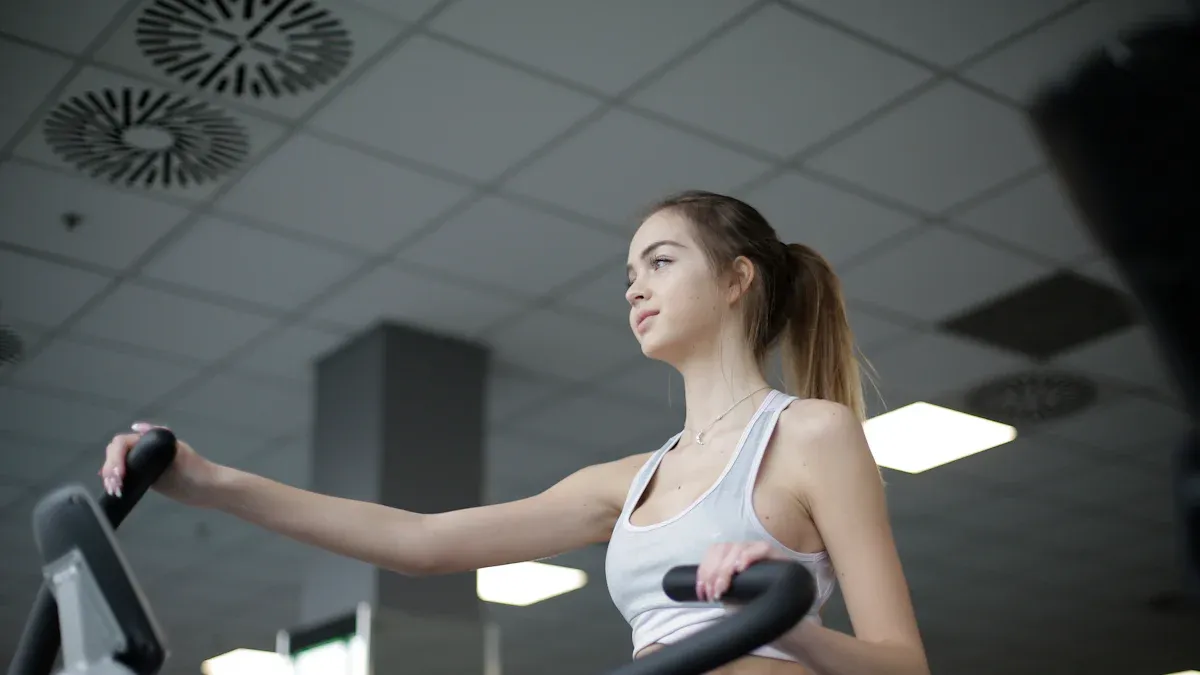
You get a lot of options when you use a standard elliptical machine. Most ellipticals come with several technical features that make your workout easier and more effective. Check out this table to see the main types you might find:
Type of Elliptical Machine | Description |
|---|---|
Front Drive Elliptical Trainer | Flywheel in front, gives you a vertical motion like stair climbing. |
Rear Drive Elliptical Trainer | Flywheel at the back, offers a longer stride and helps you keep a straighter posture. |
Compact Elliptical Trainer | Small design, just pedals, fits under your desk and works while you sit. |
Foldable Elliptical Machine | Larger than compact models, folds up for easy storage. |
You can adjust resistance settings to change your workout intensity. Most elliptical machines support a weight capacity around 300 pounds, but some go up to 400 pounds. Many models include built-in heart rate monitors and app integration, so you can track your progress. Adjustable stride length lets you find the right fit for your height.
Ellipticals give you a total body workout without putting stress on your joints. You work your quads, hamstrings, glutes, calves, and arms all at once. You can use adjustable resistance to make your workout harder or easier. This makes elliptical machines great for all fitness levels. You burn about 300 to 400 calories per hour, which is solid for low-impact cardio.
Tip: If you want a full workout that feels gentle but still gets your heart pumping, an elliptical machine is a smart choice.
Here’s a quick comparison with other cardio machines:
Machine Type | Main Benefits | Calorie Burn Rate (per hour) | Focused Muscle Groups |
|---|---|---|---|
Elliptical | Low-impact cardio, adjustable resistance, good for all fitness levels | 300-400 | Quads, hamstrings, glutes, calves, arms |
Rowing Machine | Full-body workout, high-intensity, excellent for muscle building and toning | 500-700 | Legs, back, arms, core |
You might notice some drawbacks when you use ellipticals. Sometimes resistance levels don’t adjust properly, which can make your workout less effective. Pedals may slip or feel unstable, especially if you move fast. Many users report difficulty mounting and dismounting the machine. About 20% to 30% of people feel unstable while using it. Some users struggle to start or keep the pedals moving, especially on certain brands.
Resistance levels may not adjust smoothly.
Pedals can slip or feel shaky.
Mounting and dismounting can be tricky.
Some users feel unstable during use.
Starting or keeping pedal movement can be tough for beginners.
If you want a full workout with low impact, a standard elliptical machine gives you a lot of benefits. You should consider the limitations before you decide if it fits your needs.
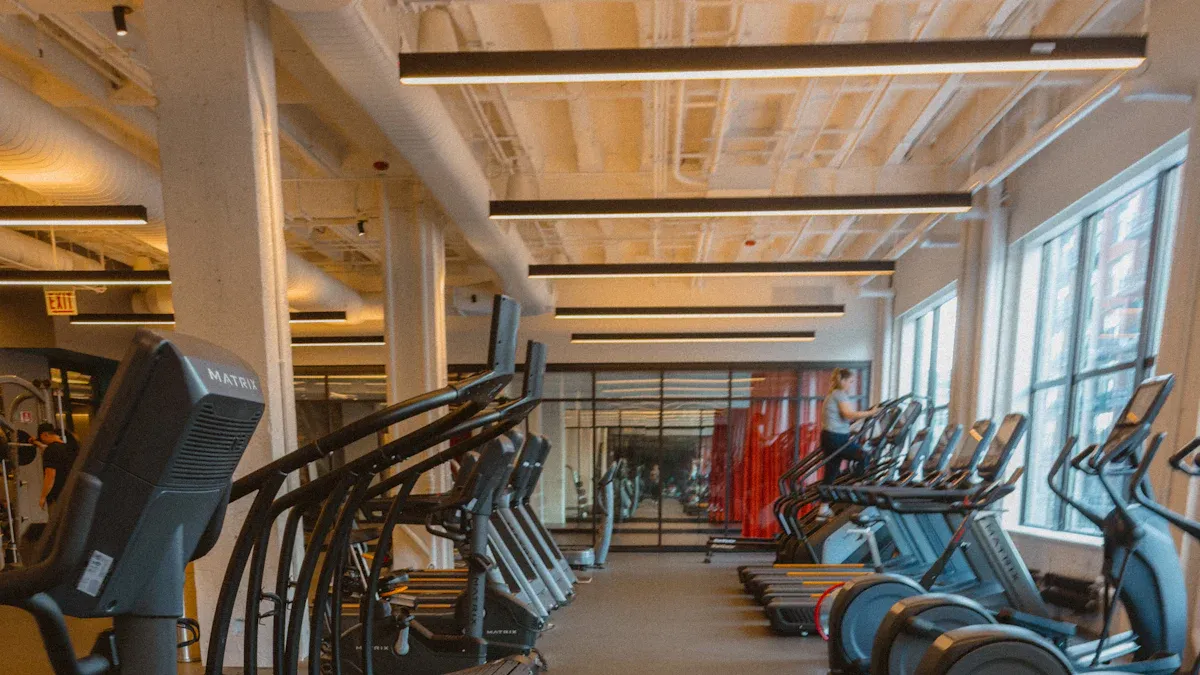
When you walk into a gym or shop for a home cardio machine, you see a lot of choices. Each machine has its own strengths and weaknesses. Let’s break down how a standard elliptical machine compares to treadmills, exercise bikes, and rowing machines across the features that matter most.
Here’s a quick table to help you see the differences at a glance:
Feature | Elliptical | Treadmill | Exercise Bike | Rowing Machine |
|---|---|---|---|---|
Calorie Burn (per hr) | 500–700 | 600–900 (running pace) | 400–600 | 428–928 |
Joint Impact | Low, but some ankle torque | High, especially running | Very low | Low to moderate |
Muscle Engagement | Upper & lower body | Mostly lower body | Lower body | Full body |
Cost (Initial) | Moderate to high | Moderate to high | Low to moderate | Moderate |
Maintenance | Moderate | Moderate to high | Low | Low to moderate |
Space Needed | Medium | Large | Small to medium | Medium |
Workout Variety | Moderate | High | Low to moderate | Moderate |
You might wonder which is better for you: elliptical vs treadmill. Both machines help you burn calories and improve your fitness, but they feel very different when you use them.
Unique Benefits of Elliptical:
You get a low-impact workout that’s easy on your knees and hips. This makes ellipticals a top pick if you have joint pain or want to avoid injury.
You work both your upper and lower body at the same time. The moving handles let you push and pull, so your arms, chest, and back get involved.
You can pedal forward or backward. This lets you target different muscles, especially your quads and hamstrings.
You can still get your heart rate up. Many people find their heart rate climbs just as high as it does on a treadmill.
Unique Benefits of Treadmill:
You control your speed and incline. This means you can walk, jog, sprint, or do hill workouts.
You burn more calories per hour at a running pace. If you want to maximize calorie burn, treadmills have the edge.
You build strong legs, especially your glutes and calves.
You can train for races or outdoor running. The treadmill mimics real-world running better than any other cardio machine.
Note: Treadmills put more stress on your joints, especially if you run. If you have knee or hip issues, you may want to stick with an elliptical.
Drawbacks to Consider:
Ellipticals sometimes feel awkward or unnatural, especially if you’re new to them.
Treadmills can be noisy and take up a lot of space. They also require more maintenance over time.
Muscle Engagement:
Ellipticals activate your upper body and quadriceps more.
Treadmills focus on your glutes and calves.
Calorie Burn:
Treadmills: 600–900 calories per hour (running).
Ellipticals: 500–700 calories per hour, depending on resistance and intensity.
Let’s look at exercise bike vs elliptical. Both machines offer a low-impact workout, but they feel very different.
Unique Benefits of Exercise Bike:
You sit down, which makes it comfortable for long sessions.
You get a very low-impact workout, perfect if you have balance issues or need extra support.
You can easily watch TV, read, or multitask while pedaling.
Unique Benefits of Elliptical:
You stand up and move your arms and legs together, so you burn more calories.
You engage your upper body, not just your legs.
You can adjust resistance and stride to change up your workout.
Feature | Exercise Bike | Elliptical Machine |
|---|---|---|
Impact | Very low, gentle on joints | Low, but more dynamic movement |
User Suitability | Great for beginners, seniors, or those with mobility issues | Ideal for users with joint concerns |
Calorie Burn Potential | 400–600 per hour | 500–700 per hour |
Upper Body Involvement | Minimal | Significant |
Comfort for Long Sessions | High | Moderate |
Tip: If you want to work your whole body and burn more calories, the elliptical wins. If you need comfort or have trouble standing for long periods, the exercise bike is a better choice.
Drawbacks to Consider:
Exercise bikes don’t work your upper body much.
Ellipticals may feel less comfortable for long workouts.
Now, let’s compare elliptical vs rowing machine. Both give you a full-body workout, but the experience is different.
Unique Benefits of Rowing Machine:
You get a powerful cardio workout that also builds strength.
You burn a lot of calories—sometimes even more than on an elliptical.
You work your legs, core, and upper body in a coordinated motion.
Unique Benefits of Elliptical:
You get a low-impact workout that’s easier on your joints.
You can adjust resistance and stride for variety.
You stand up, which can feel more natural for some users.
Feature | Elliptical Machines | Rowing Machines |
|---|---|---|
Workout Type | Full-body, low-impact | Full-body, higher intensity |
Pros | Easy on joints, good for beginners | Burns more calories, improves tone and heart health |
Cons | Less glute engagement, can be expensive | More strenuous, not ideal for beginners |
Calorie Burn:
Rowing machines: 428–928 calories per hour, depending on your weight and intensity.
Ellipticals: 500–700 calories per hour.
Muscle Engagement:
Rowers work your legs, core, and upper body together.
Ellipticals target your arms, legs, chest, and back, but with less intensity than rowing.
Note: Rowing machines can feel tough if you’re just starting out. Ellipticals are easier to use for most beginners.
Cost and Maintenance:
Both ellipticals and treadmills can cost more upfront, especially if you want a high-quality model. Cheaper machines often need more repairs.
Exercise bikes and rowers usually cost less and need less maintenance.
Space Needs:
Treadmills and ellipticals take up more room.
Exercise bikes and rowers fit better in small spaces.
Bottom Line:
If you want a low-impact, full-body workout, a standard elliptical machine gives you a great balance of calorie burn, muscle engagement, and joint protection. Treadmills work best for runners and those chasing maximum calorie burn. Exercise bikes suit anyone who needs comfort and support. Rowers deliver intense, total-body workouts but can be tough for beginners. Choose the cardio machine that matches your goals, space, and comfort level.
When you hop on an elliptical, you get a full cardio workout that feels smooth and easy on your joints. This cardio machine stands out because it gives you a full-body session without pounding your knees or hips. If you want to improve your cardiovascular health, the elliptical can help you reach your goals. You can use it for steady-state workouts or mix things up with intervals. Both styles boost your heart and lung strength.
Here’s a quick look at the main benefits you get from using an elliptical machine:
Benefit | Description |
|---|---|
Cardiovascular Endurance | Improves endurance like running, but with less joint stress. |
Lower-Impact Workout | Protects your joints, making it great for injury recovery or arthritis. |
Cardiorespiratory Fitness | Builds heart and lung power when you keep up the resistance and intensity. |
Continuous or Interval Training | Lets you switch between steady and interval workouts for better cardiovascular health. |
You also get these perks:
A full-body workout with little joint strain.
A way to hit your weekly goal of 150 minutes of moderate-intensity cardio.
A boost to your metabolism, which helps you burn more calories.
The option to try high-intensity intervals for even more calorie burn.
Studies show ellipticals raise your heart rate and oxygen use higher than an exercise bike or rowing machine. Only the treadmill beats the elliptical for heart and lung benefits.
If you want to know which machine burns more calories, the elliptical vs treadmill debate is a hot topic. Both machines help you torch calories, but the treadmill usually comes out on top. The treadmill makes you work harder with every step, especially when you run or use an incline. This extra effort means you burn more calories in the same amount of time.
Check out this table to see how many calories you can burn in 30 minutes, based on your weight:
Body Weight | Treadmill (30 min) | Elliptical (30 min) | Difference |
|---|---|---|---|
125 lbs | ~310 calories | 270 calories | +40 |
155 lbs | 372 calories | 324 calories | +48 |
185 lbs | ~445 calories | 378 calories | +67 |
You’ll notice the treadmill always burns more calories than the elliptical. For example, running hard on a treadmill can burn about 606 calories per hour, while a moderate elliptical session burns around 365 calories per hour. If you want the highest calorie burn, the treadmill is your best bet. But if you need less impact, the elliptical still gives you a strong calorie burn and a full workout.
Now let’s look at exercise bike vs elliptical. Both machines offer a low-impact way to get your cardio, but the calorie burn can be different. The elliptical usually burns more calories than the exercise bike, especially if you use your arms and keep up the intensity.
Here’s a quick comparison for a 30-minute workout:
Machine | Calories burned (30 min) |
|---|---|
Elliptical | 270–378 kcal |
Exercise bike | 210–440 kcal |
You can see that the exercise bike has a wider range. If you pedal hard or do intervals, you can match or even beat the elliptical’s calorie burn. But for most people, the elliptical gives you a higher calorie burn with a full-body workout. If you want to sit and go easy, the exercise bike is a good choice. If you want to stand, move your arms, and burn more calories, the elliptical wins.
Tip: Try both machines and see which one keeps you motivated. The best cardio equipment is the one you’ll use regularly!
If you want to compare the calorie burn between an elliptical machine and a rowing machine, you need to look at how each machine works your body. Both machines give you a full-body workout, but the way you move and the intensity you reach can change your results.
You use your arms and legs on both machines. On the elliptical, you stand and push the handles while you pedal. On the rower, you sit and pull the handle while you push with your legs. The rower feels more intense because you use your core and back muscles with every stroke. This extra effort can help you burn more calories in less time.
Let’s check out a table that shows the average calorie burn for a 30-minute workout:
Body Weight | Elliptical (30 min) | Rower (30 min) | Difference |
|---|---|---|---|
125 lbs | 270 calories | 255 calories | +15 |
155 lbs | 324 calories | 316 calories | +8 |
185 lbs | 378 calories | 377 calories | +1 |
You see that the calorie numbers are close. If you push yourself hard on the rower, you can burn even more calories. Many people find that rowing feels tougher, so you might not last as long at high intensity. On the elliptical, you can keep a steady pace and still hit your calorie goals.
Tip: If you want to burn calories fast, try interval training on either machine. Short bursts of high effort help you burn more calories and boost your metabolism.
Here’s a real-world example. Imagine you weigh 155 pounds. You do a steady workout on the elliptical for 30 minutes and burn about 324 calories. If you switch to the rower and keep the same effort, you burn around 316 calories. If you row harder, you can reach 400 calories or more.
You might wonder which machine is better for calorie burn. The answer depends on your fitness level and how hard you work. If you like a smooth, low-impact workout, the elliptical helps you burn calories without stressing your joints. If you want a challenge and don’t mind working harder, the rower lets you burn more calories in less time.
Some people find the rower tough to use for long periods. You may get tired faster, which can lower your total calorie burn. The elliptical feels easier to use for longer workouts, so you can burn more calories over time.
Note: Both machines help you reach your calorie goals. Choose the one you enjoy most, because you’ll stick with it and burn more calories in the long run.
When you step onto an elliptical, you give your joints a break from the pounding they take during other cardio activities. This machine stands out because it offers a low-impact workout that helps protect your knees, hips, and ankles. You glide through each stride, so your feet never leave the pedals. That means less shock travels up your legs.
Here’s why many people choose the elliptical for joint safety:
It reduces stress on your joints compared to running or jumping.
The Arthritis Foundation recommends ellipticals for people with knee or hip arthritis because they put minimal stress on the joints.
A 2021 study found that using an elliptical leads to less long-term joint and cartilage degeneration in the knee than cycling, running, or swimming.
If you’re recovering from injury or dealing with knee pain, you’ll likely find the elliptical much more comfortable. You can still get your heart rate up and improve cardiovascular health without worrying about joint impact. Many users say they feel safer and more stable on an elliptical, especially when they want to focus on joint safety and overall safety during exercise.
Tip: If you want a low-impact exercise that supports cardiovascular health and joint safety, the elliptical is a smart pick.
Treadmills remain popular, but they come with some risks for your joints. When you run or jog, each step sends force through your knees, hips, and ankles. Over time, this repeated impact can lead to soreness or even injury.
Here are some treadmill risks you should know:
The hardness of the running surface doesn’t change joint impact much, but your knee angle and muscle strength do.
If you overtrain or skip recovery days, you raise your risk of injury.
Ignoring knee pain can make things worse and lead to more serious problems.
Weak quadriceps or poor running form can put extra stress on your knees.
You can lower your risk by listening to your body, strengthening your legs, and using good running mechanics. Still, if joint safety is your top priority, you may want to limit treadmill use or choose a lower-impact option.
Exercise bikes and rowing machines also offer low-impact exercise, making them good choices for joint health. Both machines let you work out without putting too much pressure on your knees or hips.
Rowing machines and ellipticals both provide low-impact workouts that are gentle on your joints.
Ellipticals are less weight-bearing than other cardio machines, so they’re especially easy on your joints.
Both rowing and elliptical workouts are classified as low-impact, so they’re safer for your joints than running or jumping.
The elliptical lets you move in different ways without stressing your joints, while rowing machines mimic rowing actions that are also joint-friendly.
If you want to protect your joints and still get a great cardio workout, you can’t go wrong with these machines. They help you stay active, boost cardiovascular health, and keep joint safety front and center.
You might wonder if a low-impact machine is the right fit for you. These machines work well for many people, but some groups benefit more than others. Let’s look at who should consider making a low-impact workout part of their routine.
Who Benefits Most from Low-Impact Cardio Equipment?
People with Joint Pain or Arthritis:
If you deal with knee pain or have arthritis, you know how tough high-impact exercise can feel. Low-impact machines like ellipticals, bikes, and rowers help you stay active without making your joints hurt more. You can move smoothly and avoid the pounding that comes with running or jumping.
Older Adults:
As you age, your body needs more care. Your joints may not handle the same stress they once did. Low-impact machines offer joint safety and let you keep your heart healthy without risking injury. Many seniors find these machines easy to use and less intimidating than treadmills.
Beginners or People Returning to Exercise:
If you’re just starting out or coming back after a break, you want to avoid injury. Low-impact machines give you a safe way to build strength and endurance. You can control the pace and resistance, so you never feel overwhelmed.
People Recovering from Injury:
Physical therapists often recommend low-impact machines for rehab. You can work on your fitness while protecting healing muscles and joints. These machines help you regain movement and confidence without extra joint impact.
Anyone Focused on Joint Safety:
Maybe you have a family history of joint problems, or you just want to protect your body for the long haul. Choosing equipment that reduces joint impact is a smart move. You’ll lower your risk of injury and keep moving for years to come.
Here’s a quick table to help you see if you fit into one of these groups:
User Type | Why Low-Impact Machines Work Well |
|---|---|
Joint pain/arthritis | Less joint impact, more comfort |
Older adults | Joint safety, easy to use |
Beginners/returning users | Gentle on joints, adjustable intensity |
Injury recovery | Supports healing, reduces risk |
Joint safety focus | Prevents future problems, protects joints |
Tip: If you ever feel sore after high-impact exercise, try switching to a low-impact machine. Your body will thank you, and you’ll still get a great workout.
Low-impact machines make it easier for you to stay active, no matter your age or fitness level. You can focus on your health and enjoy exercise without worrying about joint safety or extra joint impact.
You might wonder which muscles you actually use when you step onto an elliptical. Anatomical studies show that you activate a wide range of muscle groups during your workout. You push with your legs, pull with your arms, and stabilize with your core. Take a look at this table to see exactly which muscles get involved:
Muscle Group | Muscles Activated |
|---|---|
Lower Body | Glutes, Hamstrings, Quadriceps, Calves |
Upper Body | Triceps, Rhomboids |
Core | Rectus Abdominis, Obliques, Transverse Abdominals |
You get a balanced workout that targets both your upper and lower body. Your glutes and hamstrings help you push the pedals. Your triceps and rhomboids work when you move the handles. Your core keeps you stable and upright. This combination makes ellipticals a great choice if you want to strengthen multiple muscle groups at once.
Elliptical machines stand out because they use moveable arms. You engage your arms, shoulders, and back while you pedal. Treadmills focus mostly on your legs, glutes, and core. You don’t get much upper body action on a treadmill. Bikes and rowers also target your lower body, but rowers add some upper body movement. If you want a full-body workout, ellipticals give you more muscle engagement than treadmills or bikes.
Tip: If you want to tone your arms and legs together, try using the elliptical’s handles during your workout. You’ll notice your upper body working harder.
You probably want a machine that keeps your workouts interesting. Ellipticals offer several ways to mix things up. You can pedal forward or backward, which helps you develop balanced muscles. You adjust resistance and stride length to change the intensity. This versatility makes ellipticals ideal for different fitness levels and goals.
Check out this table to compare how ellipticals stack up against treadmills, rowers, and bikes for workout variety and versatility:
Feature | Elliptical Machines | Treadmills | Rowers | Bikes |
|---|---|---|---|---|
Joint Impact | Low-impact, joint-friendly workouts | Higher impact, weight-bearing | Low-impact, full-body workout | Low-impact, joint comfort |
Muscle Engagement | Full-body engagement (upper and lower body) | Primarily lower body | Full-body engagement | Primarily lower body |
Versatility | Forward and backward pedaling for balanced development | Limited to forward motion | Limited to rowing motion | Limited to cycling motion |
Space Efficiency | Moderate space requirement | Requires more space | Moderate space requirement | Compact design |
Ideal For | Various fitness levels, injuries, low-impact needs | Calorie burning | Comprehensive workouts | Joint comfort, space efficiency |
Ellipticals let you change your routine easily. You can do intervals, steady-state cardio, or even focus on muscle endurance. You don’t get bored because you have options. If you want a machine that adapts to your needs, the elliptical is a smart pick.
Note: Ellipticals give you a full-body workout, low-impact movement, and plenty of ways to keep your routine fresh. You stay motivated and avoid plateaus.
You probably want to know how much you’ll spend on different home fitness machines. Ellipticals usually cost between $600 and $2,500, depending on features and build quality. Treadmills fall in a similar range, but high-end models can go even higher. Exercise bikes are often the best value, with many solid options under $500. Rowing machines range from $300 for basic models to $1,500 or more for advanced ones.
Here’s a quick table to help you compare:
Machine Type | Typical Price Range |
|---|---|
Elliptical | $600 – $2,500 |
Treadmill | $700 – $3,000+ |
Bike | $200 – $1,500 |
Rower | $300 – $1,500+ |
If you want the most value for your money, start by thinking about your goals and how often you’ll use the machine. Sometimes, paying a little more up front means better durability and safety.
You want your equipment to last, so regular care is important. Ellipticals need a bit of attention, but nothing too complicated. Here’s what you should do to keep your machine running smoothly:
Wipe down the machine after each use to prevent sweat and dirt from building up.
Check for loose bolts or worn parts every week. This helps you catch problems early and keeps you safe.
Lubricate moving parts once a month. This reduces friction and extends the life of your elliptical.
Replace worn-out parts as soon as you notice them. This keeps your workouts safe and prevents bigger issues.
Schedule a yearly check-up with a pro. They can spot hidden problems and make sure everything works as it should.
Treadmills need similar care, but their belts and motors may require more frequent attention. Bikes and rowers are usually easier to maintain, with fewer moving parts. No matter which machine you choose, regular cleaning and inspection boost safety and protect your investment.
Tip: Set a reminder on your phone for monthly maintenance. You’ll save money and avoid surprise repairs.
Space matters when you pick a cardio machine for your home. Ellipticals and treadmills both need a good amount of room. Even folding treadmills can feel bulky in a small space. Bikes are the most compact option and fit easily in corners or next to a wall. Rowers can be stored vertically, so they’re a smart choice if you want to save floor space.
Here’s a table to help you see the difference:
Machine Type | Space Requirement |
|---|---|
Elliptical | More space required |
Treadmill | More space required |
Bike | Smaller footprint |
Rower | Can be stored vertically |
When you set up your home gym, measure your space before you buy. Ellipticals and treadmills look smaller in stores, but they can take over a room at home. If you live in an apartment or have a small workout area, a bike or rower might be the best value for your space.
Note: Always leave extra room around your machine for safety and easy movement. You want to enjoy your workout without feeling cramped.
Choosing the right machine means thinking about price, maintenance, and space. You’ll get the most value and safety if you match your choice to your home and your needs.
When you set up a home gym, you want equipment that fits your space, meets your needs, and gives you the best value. Elliptical machines check a lot of boxes for home workouts. You get a machine that works for many users, from beginners to experienced athletes.
Here’s why ellipticals often make the cut for home gyms:
They provide a low-impact cardio solution, which is perfect if you have joint concerns or want to avoid injuries.
You get a full-body workout every time you step on, so you don’t need extra machines for your arms and legs.
Most models let you adjust resistance and stride length, making them versatile for all fitness levels.
You might wonder how ellipticals compare to treadmills, bikes, and rowers for home use. Let’s break it down:
Equipment | Space Needed | Workout Variety | Noise Level | User Satisfaction | Value for Home Workouts |
|---|---|---|---|---|---|
Elliptical | Medium | High | Moderate | High | High |
Treadmill | Large | High | High | High | Moderate |
Exercise Bike | Small | Moderate | Low | Moderate | High |
Rowing Machine | Medium | Moderate | Moderate | Moderate | Moderate |
Ellipticals offer a strong mix of features for home workouts. You get a machine that doesn’t take up as much space as a treadmill, but still gives you a challenging routine. Many users say they feel satisfied with their elliptical because it’s easy to use and gentle on the body. You can place it in a spare room, basement, or even a living room corner.
If you want the most value, look for an elliptical with adjustable settings and a sturdy build. Some models fold up or have wheels, so you can move them when you need extra space. You’ll also find that ellipticals are quieter than treadmills, which helps if you live in an apartment or want to work out early in the morning.
Here are a few tips for picking the right elliptical for your home gym:
Measure your space before you buy.
Choose a model with the features you’ll actually use.
Think about who else in your home might use the machine.
Look for a warranty and good customer support.
Tip: If you want a machine that gives you the most value for your money and supports a variety of home workouts, an elliptical is a smart choice.
You can count on an elliptical to help you reach your fitness goals without crowding your home or breaking your budget. It’s a solid investment for anyone who wants to make home workouts a regular part of their routine.
You might wonder if a standard elliptical machine is the best fit for you. If you want a cardio machine that feels smooth and easy on your joints, this could be your top pick. Many seniors choose an elliptical because it protects their knees and hips. If you have arthritis or past injuries, you will likely enjoy the low-impact movement. You also get a full-body workout, which means you work your arms and legs at the same time. This helps you burn more calories in each session.
Seniors often find the elliptical easy to use. You can adjust the resistance and stride to match your comfort level. If you want to burn calories without feeling sore the next day, this machine delivers. It also works well for beginners who want to start a new cardio routine. If you like variety, you can pedal forward or backward to target different muscles.
Tip: If you want a safe, joint-friendly way to burn calories and get a full-body workout, the standard elliptical machine is a smart choice.
Sometimes, another cardio machine might suit you better. If you love running or want to train for a race, a treadmill is the best option. You can walk, jog, or sprint, and you control the speed and incline. Treadmills help you burn the most calories in the shortest time. Seniors who feel steady on their feet may also enjoy walking on a treadmill, but running can be tough on the joints.
If you need extra support or have balance issues, an exercise bike is a great pick. Many seniors use bikes because they can sit down and still get a good cardio workout. Bikes are gentle on your knees and easy to use for long sessions. If you want to burn calories while watching TV or reading, a bike makes it simple.
Rowing machines give you a powerful full-body workout. You use your arms, legs, and core together. If you want to burn a lot of calories and build strength, try a rower. Some seniors find rowing tough at first, but it can be rewarding if you stick with it.
Here’s a quick guide to help you decide:
Choose a treadmill if you want to run, walk, or burn calories fast.
Pick a bike if you need comfort, support, or have balance concerns.
Try a rower if you want a strong, full-body workout and enjoy a challenge.
You want your cardio equipment to match your goals. Fitness experts suggest looking at what you want to achieve before you buy. Here’s a table to help you see which machine fits your needs:
Fitness Goal | Best Equipment Features |
|---|---|
Weight loss & calorie management | Machines that help you keep your heart rate up for longer, like treadmill or elliptical |
Endurance development | Equipment with steady resistance and low fatigue, such as bike or elliptical |
Joint protection & rehabilitation | Low-impact machines with adjustable resistance, like elliptical or bike |
Time efficiency & intervals | Machines that warm up fast and change resistance easily, like treadmill or rower |
Full-body engagement | Equipment that works both arms and legs, such as elliptical or rower |
If you want to burn calories and lose weight, pick a cardio machine that keeps your heart rate up without making you too tired. For joint safety, look for low-impact options. If you want to build endurance, choose a machine you can use for longer sessions, like a bike or elliptical. For a full-body workout, the elliptical or rower gives you the best results.
Note: Think about your goals before you choose. The right cardio equipment helps you stay motivated and reach your fitness targets.
You’ve seen how elliptical machines stack up against treadmills, bikes, and rowers. If you want a low-impact, full-body workout that fits your home and budget, an elliptical makes sense. Need max calorie burn or race training? Go for a treadmill. Want comfort or space-saving? Try a bike or rower. Think about your goals and your body’s needs. The best cardio machine is the one you’ll use and enjoy.
Tip: Pick the equipment that keeps you motivated and fits your lifestyle!
Yes, you can lose weight with an elliptical. You burn calories and boost your metabolism. If you use it regularly and watch your diet, you will see results.
You get less impact on your knees and hips with an elliptical. The smooth motion protects your joints. If you have joint pain, you will feel more comfortable.
Aim for 20–40 minutes per session. You can start with shorter workouts and build up. If you want more results, try interval training.
Treadmills usually burn the most calories, especially if you run. Rowers and ellipticals also burn a lot. If you push yourself, you will see big calorie numbers.
Absolutely! You can adjust resistance and stride. If you are new to exercise, you will find the elliptical easy to use and gentle on your body.
Yes, you use your arms, shoulders, and back with the moving handles. If you want a full-body workout, the elliptical gives you both upper and lower body action.
Exercise bikes and rowing machines fit best in small rooms. If you need to save space, you will find these machines easy to store.
Tip: If you want a quiet machine for your home, look for an elliptical or bike with magnetic resistance.


