
- All
- Product Name
- Product Keyword
- Product Model
- Product Summary
- Product Description
- Multi Field Search
Views: 0 Author: Site Editor Publish Time: 2026-03-18 Origin: Site


Curiosity about how cardio machines actually function often starts when someone steps onto an Interactive Elliptical and notices how different it feels from running or cycling. The movement is smooth, controlled, and somehow demanding without being harsh on the joints. Understanding how this machine works mechanically—and how interactive features enhance the experience—makes it easier to see why it has become a central piece of modern gym design and full-body cardio training.
An interactive elliptical combines elements of walking, running, and stair climbing into one guided motion path. Unlike a treadmill, where each step involves lifting the foot and striking the belt again, an elliptical keeps the user’s feet in continuous contact with the pedals. This single design principle shapes the entire workout experience.
Instead of mimicking flat-ground walking alone, the machine creates a hybrid stride. The legs move in a looping pattern that feels natural but slightly amplified, encouraging both forward drive and upward lift. The addition of moving handlebars allows the upper body to participate, transforming what might otherwise be a leg-only exercise into coordinated, full-body cardio.
The key to this simulation lies in how the stride path is engineered. The pedals do not move up and down in a straight line; they follow an elongated oval pattern that guides the legs through a controlled range of motion.
The oval or elliptical path is the defining mechanical feature of the machine. As the user pushes one pedal forward and downward, the other moves backward and upward in a synchronized cycle. This continuous loop prevents abrupt stops or hard impacts.
Compared to running, where each step includes a landing phase that transfers force through the ankles, knees, and hips, the elliptical stride spreads the effort across a smooth arc. There is no sharp foot strike. The body remains in a fluid motion, which reduces sudden stress on joints.
This design also encourages rhythmic pacing. Once users find their stride, they can maintain steady movement with less disruption, making it easier to sustain longer cardio sessions.
On a treadmill, speed is determined by the moving belt. On an elliptical, the user controls both cadence and effort. Because the feet stay planted, there is less risk of missteps or uneven landings.
Beginners often feel more confident because the motion is guided. The pedals cannot drift too far from the intended path. This controlled environment supports safer progression, especially for users who want to build endurance without high-impact strain.
The working principle of an interactive elliptical is straightforward once broken down into its core components. When the user begins to push the pedals, a crank system transfers that movement through a linkage mechanism. This linkage connects the pedals to both the resistance system and, in many models, to the moving handlebars.
The machine itself does not force the motion. Instead, it responds to the user’s input. The resistance system determines how much effort is required to continue the stride. As resistance increases, the pedals become more challenging to move, requiring greater muscular engagement and cardiovascular effort.
Although the internal design involves bearings, flywheels, and drive systems, the experience remains intuitive. Users simply step on and move; the mechanical system translates that movement into a controlled training load.
The pedals are mounted on arms connected to a rotating crank. As the crank turns, it drives the flywheel. The flywheel adds smoothness by maintaining momentum throughout the stride.
In models equipped with moving handlebars, the crank linkage also connects to upper-body arms. When the user pushes or pulls the handles, the upper body contributes to the rotation cycle. This synchronized motion means the legs and arms work together rather than independently.
This coordination enhances full-body engagement. Instead of isolating the lower body, the machine encourages active participation from the shoulders, chest, and back, while the core stabilizes the torso.
Resistance is what transforms simple motion into effective training. In an interactive elliptical, resistance can be adjusted electronically or through magnetic systems. Increasing resistance makes each stride require more force, similar to climbing a steeper hill.
The crucial point is that resistance increases effort without altering the low-impact movement pattern. The stride remains smooth; only the muscular demand changes. This flexibility makes the machine suitable for beginners, intermediate users, and advanced athletes.
Component | What It Does | What the User Feels |
Pedals | Guide the stride path | Smooth lower-body movement |
Moving Handles | Link arm motion to stride | More full-body engagement |
Resistance System | Adjust workout load | Easier or harder effort |
Console / Interactive Display | Shows feedback and programs | Better pacing and motivation |
This integration of mechanical and digital elements explains why the experience feels both natural and structured.
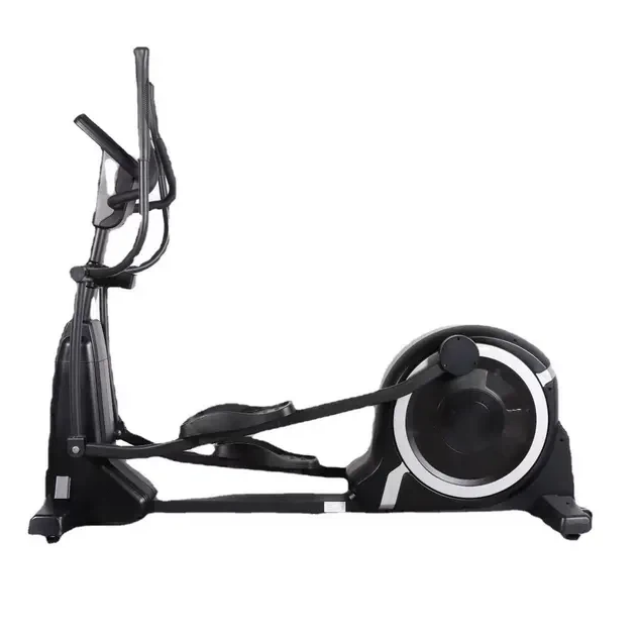
The term “interactive” goes beyond adding a screen. An interactive elliptical integrates real-time data, programmed sessions, and user feedback into the mechanical training system.
The display console monitors performance indicators such as time, distance, calories burned, resistance level, and heart rate. These metrics allow users to adjust intensity mid-session rather than guessing whether they are working hard enough.
Built-in programs add structured variety. Interval training, endurance challenges, and target-based workouts create purposeful sessions instead of repetitive movement.
Real-time feedback encourages self-correction. If heart rate drops below a target zone, the user can increase cadence or resistance. If fatigue builds too quickly, intensity can be adjusted.
This responsive environment enhances training efficiency. Rather than moving blindly for a set duration, users engage with the machine as an active training partner.
Pre-set programs provide structure for those who may not know how to design their own cardio sessions. Interval formats alternate between higher and lower resistance phases, simulating outdoor terrain changes.
Guided sessions also improve motivation. When users feel challenged by defined goals, they are more likely to complete the workout and return consistently.
For gym operators, interactive features increase member engagement. Equipment that feels dynamic supports retention and long-term usage.
The working principle of the elliptical determines muscle involvement. Because the stride combines forward drive and upward lift, multiple muscle groups activate simultaneously.
The quadriceps extend the knees during the forward push. The hamstrings assist in pulling the pedals backward. The glutes engage as the hips extend, particularly when resistance is increased. Calves stabilize and assist during each rotation.
As resistance rises, these muscle groups work harder, promoting both endurance and strength development in the lower body.
Maintaining upright posture requires core stabilization. Abdominal and lower-back muscles support balance throughout the stride.
When users actively push and pull the moving handles, shoulders, chest, and upper back contribute to the movement. This dual engagement transforms the elliptical machine workout into a coordinated full-body session.
Many users question whether low-impact exercise can deliver meaningful results. The elliptical demonstrates that effectiveness depends on intensity and duration, not impact.
Because the feet never leave the pedals, there is no repeated landing phase. The absence of harsh foot strikes significantly reduces joint stress.
This makes the machine suitable for users who want to avoid the discomfort associated with high-impact cardio while still training consistently.
Intensity is achieved by increasing resistance, cadence, or session length. A higher resistance level simulates climbing effort, elevating heart rate and muscular demand.
Longer sessions at moderate resistance improve cardiovascular endurance. Short, high-resistance intervals can challenge anaerobic capacity.
The working principle remains constant; only the load changes. This adaptability supports progressive training without compromising joint comfort.
Beginners benefit from the guided motion and reduced intimidation compared to free-running environments. The smooth stride encourages confidence and consistent pacing.
Users seeking full-body cardio appreciate the involvement of both upper and lower body. For those who want efficiency, combining multiple muscle groups in one session saves time.
Commercial facilities value versatility. A single machine that accommodates different fitness levels and training styles simplifies equipment planning. Interactive features further enhance appeal by delivering measurable, engaging sessions.
For suppliers and manufacturers like Shandong Obison Fitness Equipment Co., Ltd., developing durable, interactive elliptical systems means offering gyms a practical solution that blends mechanical reliability with digital engagement.
An high-quality Interactive Elliptical works by combining a guided oval stride path, synchronized pedal and handle linkage, adjustable resistance, and performance feedback into one cohesive training system. This integration creates smooth, low-impact movement while still delivering demanding full-body cardio. For gyms and fitness facilities seeking engaging, versatile equipment, this advanced elliptical trainer design offers both mechanical efficiency and interactive motivation. To learn more about professional cardio solutions developed by OBS FITNESS, contact us and explore how our equipment can elevate your training space.
An interactive elliptical adds real-time performance feedback, programmed sessions, and adjustable resistance controls that respond to user input, making each elliptical machine workout more structured and engaging.
Yes. The guided stride path and continuous pedal contact reduce impact and help beginners maintain balance and rhythm while gradually increasing resistance as fitness improves.
Yes. When the moving handles are actively used, the upper body and core engage along with the lower body, turning the workout into a coordinated full-body session.
The feet remain in constant contact with the pedals, eliminating repeated landing forces. This design reduces joint stress while still allowing users to increase intensity through resistance and duration adjustments.


