
- All
- Product Name
- Product Keyword
- Product Model
- Product Summary
- Product Description
- Multi Field Search
Views: 0 Author: Site Editor Publish Time: 2025-12-27 Origin: Site


When you start shopping for treadmill equipment, the price gap can be shocking. You will see sleek, high-tech residential models selling for $1,500 to $3,000, while machines that look remarkably similar in gym catalogs command prices between $5,000 and $12,000. This massive disparity often leads buyers to wonder if the higher price tag is simply a markup for brand prestige or if it represents a fundamental difference in engineering. The confusion deepens when residential brands slap the word "Commercial" on machines that are actually designed for living rooms, creating a marketing trap for the uniformed buyer.
The distinction between these categories is not merely about fancy touchscreens or cup holders. It comes down to the physics of heat management, structural integrity, and liability. Choosing the wrong unit can be a costly mistake. A home machine placed in a gym will fail within months and void its warranty, while a true commercial unit might be electrical overkill for a casual walker. This guide separates marketing labels from engineering reality, helping you make a decision based on Total Cost of Ownership (TCO), daily usage hours, and actual hardware capability.
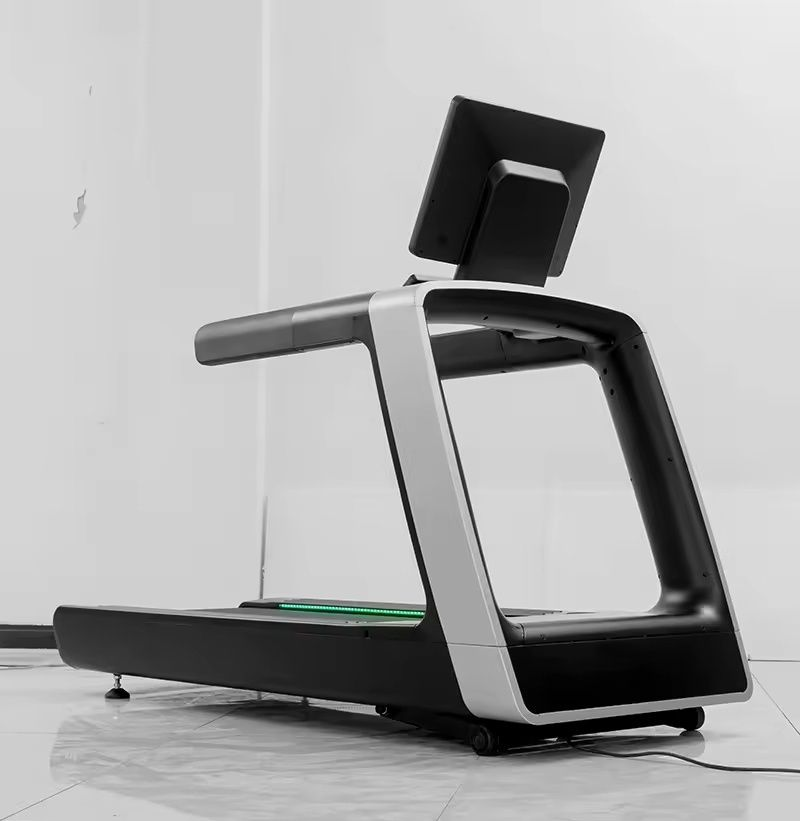
Usage Definition: "Home" is <3 hours/day; "Full Commercial" is designed for 12+ hours/day of continuous heat and stress.
Motor Engineering: Commercial units use AC (Alternating Current) motors for thermal management; home units use DC (Direct Current) motors which are quieter but prone to overheating.
The Warranty "Gotcha": Using a residential machine in a business setting (even a small office gym) usually voids the warranty immediately.
Infrastructure Requirements: True commercial machines often require dedicated 20-amp electrical circuits (NEMA 5-20R) and cannot fold.
To navigate the market effectively, you must ignore the model names and look at the "Usage Class" rating. Most manufacturers categorize their equipment into three distinct tiers based on duty cycles.
These machines are designed explicitly for single-family environments. Engineers assume the treadmill will be used by one or two people per day. The frames often feature folding mechanisms to save space in apartments or basements.
The usage cap is generally strictly limited to 1–3 hours per day. While high-end residential models are impressive, they are built with the assumption that the motor will have ample time to cool down between sessions. They function perfectly for walking, light jogging, or a single user training for a marathon. However, they are not built to run continuously from morning until night.
This category acts as a bridge between home and club equipment. It targets non-dues-paying facilities like Apartment Complexes (HOAs), corporate wellness rooms, hotels, and Personal Training studios. These environments see more traffic than a home but less than a 24-hour mega-gym.
The usage cap usually sits between 3 to 6 hours per day. This is the "sweet spot" for many small business owners. These units offer better warranty terms than residential machines—ensuring you are covered in a business setting—but come at a significantly lower cost than full club-rated units. They often strip away some of the heavy steel plating found on club units but upgrade the motor and rollers beyond residential standards.
These are the tanks of the fitness world. You find them in big-box gyms, university recreation centers, and 24/7 fitness facilities. They are designed with one primary goal: to run indefinitely without failure.
The usage cap is effectively unlimited, often rated for 12 to 18+ hours of daily operation. A true commercial treadmill is built to run empty without overheating and support users weighing up to 400 or 500 lbs. They do not fold, they rarely squeak, and they prioritize durability over space-saving features.
When you look under the motor hood, the engineering differences become undeniable. Manufacturers use entirely different components for commercial environments to handle heat and friction.
The most significant technical difference lies in the type of current fueling the motor.
Home units typically use DC (Direct Current) motors. These are excellent for residential settings because they are quieter and offer smoother operation at lower speeds. However, DC motors rely on internal brushes to conduct electricity. These brushes wear down over time. More importantly, DC motors accumulate heat rapidly during long, continuous runs. If you run a DC motor for 6 hours straight, the heat buildup can melt internal components or trip thermal sensors.
Commercial units use AC (Alternating Current) motors. AC motors are brushless. They generate massive torque and are designed to sustain lower operating temperatures. An AC motor can run at 10 mph for 24 hours without overheating. The trade-off is noise and power; AC motors tend to produce a louder hum and require a higher startup voltage.
The rollers are the metal tubes at the front and back of the deck that the belt moves around. Size matters immensely here.
Home units generally use rollers smaller than 2.5 inches in diameter. Smaller rollers force the belt to make a tighter turn, which increases tension and heat. Commercial units utilize rollers larger than 3 inches. This larger diameter creates a broader contact patch with the belt. It reduces the RPM required by the bearings and lowers the tension needed to keep the belt from slipping. This simple physics adjustment extends the lifespan of the belt from roughly 500 hours on a home unit to over 15,000 hours on a commercial machine.
Friction is the enemy of treadmill longevity. The deck (the board you run on) requires constant lubrication to prevent the belt from burning out the motor controller.
Lubrication: Home decks usually require the owner to manually apply silicone lubricant every few months. Commercial decks often feature wax-impregnated systems. As the deck heats up during use, it releases a microscopic layer of wax, making the system self-lubricating and virtually maintenance-free.
Reversibility: A hidden value in commercial machines is the double-sided deck. On a high-end unit, the deck is finished on both sides. When the top surface eventually wears down after 15,000 miles, a technician can simply flip the deck over. This effectively doubles the hardware lifespan before a replacement part is needed.
If you have ever sprinted on a cheap treadmill, you know the terrifying feeling of the console shaking violently. Mass prevents this.
Commercial units typically weigh over 400 lbs, with some reaching 600 lbs. This sheer mass anchors the machine to the floor, preventing it from shaking even when a 250 lb linebacker is sprinting at full speed. Furthermore, commercial frames are welded solid for rigidity. They are non-folding. If a treadmill claims to be "commercial grade" but has a hydraulic lift to fold up, it is almost certainly a residential or light-commercial hybrid, not a true club-rated machine.
| Feature | Home Treadmill | Commercial Treadmill |
|---|---|---|
| Motor Type | DC (Direct Current) | AC (Alternating Current) |
| Daily Usage | < 3 Hours | 12+ Hours / Unlimited |
| Unit Weight | 150 - 250 lbs | 400 - 600 lbs |
| Roller Size | < 2.5 inches | > 3.0 inches |
| Frame | Folding | Welded / Non-Folding |
The user interface on a treadmill serves different purposes depending on the setting. Home users often want entertainment, while gym owners prioritize reliability.
Home consoles focus on subscription retention. Brands like Peloton or NordicTrack build their hardware around locked ecosystems (iFit, etc.) that require monthly fees to unlock full functionality. They prioritize massive touchscreens that stream Netflix or scenic runs.
Commercial consoles focus on "Get on and Go." The user interface is simplified so that a new gym member can start a workout in seconds without logging into an account. The primary goal is durability against sweat, aggressive tapping, and general vandalism.
However, commercial spaces are evolving. Modern gyms are integrating functional fitness areas where cardio and strength training mix. This has led to the rise of the Rotating Screen Commercial Treadmill. These hybrid units feature heavy-duty screens that swivel. This allows a user to run a 5K, then dismount and follow a HIIT yoga or dumbbell routine on the floor beside the machine while keeping the instructional content visible. This versatility is essential for modern functional fitness zones in hotels and studios.
Another critical durability factor is the input method. Cheap membrane buttons—the soft plastic bubbles you press—often crack and peel after thousands of uses. In contrast, an LED Keyboard Commercial Treadmill utilizes capacitive touch or mechanical hard buttons protected by hardened acrylic. These interfaces withstand long fingernails, repeated pounding from tired runners, and the corrosive nature of sweat much better than standard membrane overlays.
Beyond the machine itself, you must consider where you plug it in and who is using it. These hidden factors often break the deal for residential buyers eyeing commercial gear.
This is the most common oversight. Most home treadmills plug into standard 15-amp wall outlets (NEMA 5-15), which are found in every bedroom and living room.
True commercial machines frequently require a dedicated 20-amp circuit. They often use a specific NEMA 5-20R plug, which has one horizontal blade perpendicular to the other. You cannot plug this into a regular wall outlet. Installing one requires a dedicated line from your breaker box. Using an adapter to bypass this is a severe fire hazard, as the machine's current draw can melt standard residential wiring.
Intuition suggests that "better" means "quieter," but this is not always true for motors. Commercial AC motors are often louder than premium home DC motors. They require powerful cooling fans that run constantly to dissipate heat. In a bustling gym with music playing, this noise is irrelevant. In a quiet living room at 6 AM, the industrial hum of an AC motor and its cooling fans might be intrusive to family members.
If you are a business owner, this section is critical. Manufacturers strictly segment their warranties.
B2B Buyers: If you buy a high-end "Home" treadmill (like a NordicTrack Commercial 1750 or equivalent) and place it in a hotel gym, your warranty is likely void the moment you install it. The fine print usually excludes "non-residential" settings.
Liability: This goes beyond repair costs. If a hotel guest gets injured on a residential machine inside your facility, you face increased negligence liability. Lawyers can argue that you provided "improper equipment" not rated for the usage environment. Commercial machines come with safety certifications that protect the facility owner in these legal scenarios.
To finalize your decision, locate yourself in one of these three scenarios. This simplifies the complex spec sheets into a clear purchasing path.
Verdict: Must buy Full or Light Commercial.
Reasoning: You cannot risk the liability of a home machine, nor can you afford the downtime. When a treadmill breaks in a gym, it gets an "Out of Order" sign. Too many signs kill member retention. You need the AC motor and the valid commercial warranty to protect your business assets.
Profile: Heavy runners (>200 lbs), multi-user families (4+ people), or marathoners running 50+ miles/week.
Verdict: Light Commercial or Refurbished Full Commercial.
Reasoning: A standard home unit is not built for your volume. You will likely burn through a standard DC motor in 2 years. While the upfront cost of a commercial unit is higher, the ROI pays off in years 4 and 5 when the machine is still running smoothly without repairs. A refurbished commercial unit can often be found for the same price as a new high-end home unit.
Verdict: High-end Residential.
Reasoning: Paying for an AC motor, a dedicated 20-amp circuit, and a non-folding frame is overkill for 30 minutes of walking per day. A quality residential machine offers softer cushioning, better entertainment integration, and the ability to fold the deck up, which is far more valuable for the average homeowner.
Ultimately, the difference between commercial and regular treadmills is not about luxury—it is about longevity and duty cycle. A commercial machine is an industrial tool designed to survive abuse, heat, and continuous friction for a decade. A home machine is a consumer appliance designed for comfort, quiet operation, and moderate use.
Before you buy, ignore the "Commercial" sticker on the front of the machine. Instead, check the unit weight; if it is under 300 lbs, it is likely not true commercial grade. Check the rollers; they should be substantial. And most importantly, check the plug shape. If you are equipping a business, ensure you check the "Warranty" tab specifically for "Commercial Use" exclusions. Making the right distinction now will save you thousands of dollars in burnt-out motors and voided warranties later.
A: Generally, no. Many residential brands use "Commercial" as a model name (e.g., NordicTrack Commercial series) to imply quality. These are typically high-end residential machines with DC motors. They are excellent for home use but are not rated for gym environments and usually carry warranties that are void if used in a commercial setting.
A: Yes, provided you have the space and power. You must ensure your floor can support a 400+ lb static load (plus your running impact). Crucially, check if the machine requires a dedicated 20-amp circuit (NEMA 5-20R). You may need an electrician to install the correct outlet before the machine arrives.
A: For heavy runners, a refurbished commercial unit is often the better value. You get a superior AC motor, larger rollers, and a welded frame for the price of a mid-range home unit. However, ensure the inverter and motor have been tested, as replacement parts for commercial units can be expensive.
A: The noise comes from the AC motor and its cooling infrastructure. Unlike home DC motors that prioritize silence, commercial AC motors prioritize thermal management. They use powerful fans to keep the engine cool during 24/7 operation. In a home setting, this constant hum is noticeable, whereas, in a gym, it blends into the background noise.


