
- All
- Product Name
- Product Keyword
- Product Model
- Product Summary
- Product Description
- Multi Field Search
Views: 0 Author: Site Editor Publish Time: 2026-05-24 Origin: Site


Gym floors often feature visually complex machines tucked into corners. Many users walk right past them. They feel intimidated by the bulky levers and multiple adjustable pads. However, these units provide highly efficient targeted lower-body isolation. A commercial Pin Loaded Machine designed specifically for the hips offers a unique biomechanical advantage. It allows four distinct planes of resistance in a single footprint. We rarely see equipment isolating pelvic and thigh muscles so precisely while simultaneously protecting your spine.
We will demystify the anatomical benefits behind this versatile workstation. You will learn proper biomechanics to maximize muscle engagement safely. We will also provide a clear framework. Facility managers and serious athletes can use it to evaluate commercial-grade multi-hip equipment effectively.
Comprehensive Isolation: Targets four primary lower-body muscle groups—glutes, hip flexors, abductors, and adductors—through adjustable rotational resistance.
Biomechanical Efficiency: Offers constant tension and a 1:1 resistance ratio, providing more controlled isolation compared to free weights or resistance bands.
Space & ROI Optimization: Functions as a 4-in-1 workstation, making it a critical asset for boutique gyms, hotel fitness centers, and space-constrained facilities.
Hardware Evaluation: The effectiveness of the machine relies heavily on micro-adjustability (e.g., 10° intervals), stable footing (knurled/diamond-plated plates), and clear instruction placards for safe adoption.
Multi-hip stations excel at isolating specific muscles safely. Free weights often recruit secondary stabilizers. This multi-axis machine forces the target muscle to do the heavy lifting. By simply adjusting your body position and the resistance pad, you can engage four entirely different lower-body muscle complexes.
Hip extension involves pushing your leg backward against resistance. Many gym-goers refer to this movement as standing kickbacks. It serves as a foundational exercise for building posterior chain strength.
Action: Pushing the resistance pad backward behind your body line.
Benefit: Prime isolation for the gluteus maximus without loading the spine. It offers a much safer alternative to heavy barbell good mornings for users experiencing lower back sensitivities.
Form Note: Differentiate your execution based on your specific goals. Straight-leg execution heavily engages your hamstrings. Bent-knee execution offers much better glute isolation. Keeping your knee bent at 90 degrees removes hamstring tension, forcing the gluteus maximus to drive the weight.
Hip flexion trains the muscles responsible for lifting your knee toward your torso. People frequently neglect these muscles during standard leg days.
Action: Driving the resistance pad upward using your knee.
Benefit: Builds explosive lower-body power necessary for sprinting. Strong hip flexors also improve eccentric control during deep squats. They help pull your torso down into the "hole" safely.
Common Mistake: Avoid using momentum. Lift the pad smoothly and hold the top position briefly to maximize psoas activation.
Abduction involves moving your limb away from your body's midline. This lateral movement is vital for stabilizing the pelvis.
Action: Pushing the pad outward away from the body's midline.
Benefit: Critical for pelvic stability, knee alignment, and injury prevention. A strong gluteus medius prevents the knee from caving inward during heavy squats or running. This movement is excellent as a high-rep activation exercise before heavy compound lifts.
Adduction involves bringing your limb across or toward your body's midline. This motion targets the inner thigh muscles directly.
Action: Pulling the pad inward toward the body's midline.
Benefit: Strengthens the inner thigh. This supports overall knee joint stability. It also increases lateral movement capacity for athletes engaging in field sports.
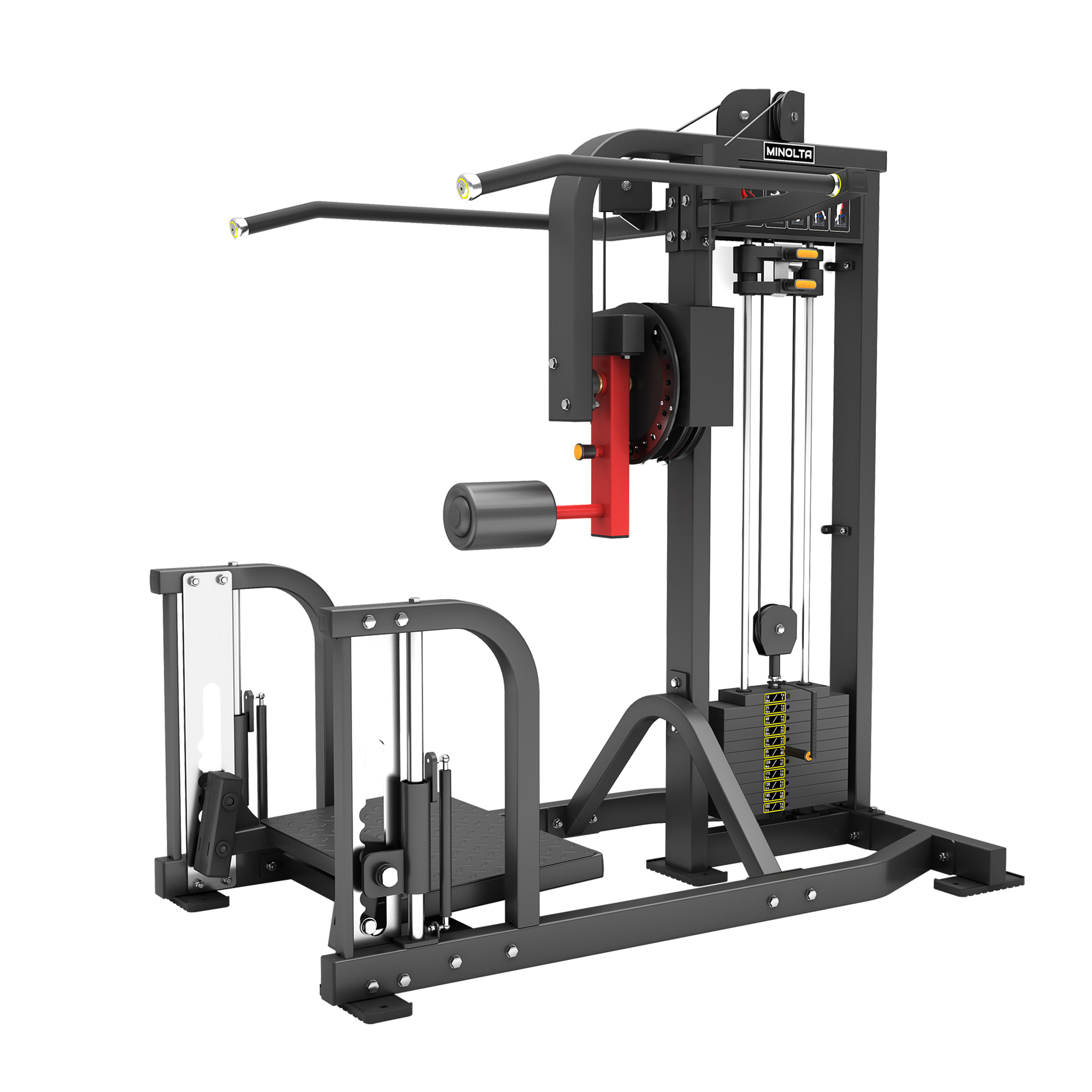
Biomechanics dictate how effectively a muscle grows and strengthens. The multi-hip station utilizes precise engineering to optimize muscle recruitment. It strips away the balance requirements of free weights. This allows complete neural focus on contracting the target muscle.
A high-quality multi-hip station utilizes a specialized cam and cable system. This system maintains uniform resistance throughout the entire range of motion. Resistance bands fail to do this. Bands provide almost zero tension at the start of a movement. They only peak at the absolute end of the stretch. The cam profile on a commercial unit perfectly matches the human strength curve. You experience challenging, consistent resistance from the starting position all the way through the lockout.
Many standard functional trainers feature a 2:1 weight stack ratio. This means pulling 100 pounds only requires 50 pounds of actual force. A dedicated lower-body machine requires a strict 1:1 weight stack ratio. The glutes and quadriceps generate immense power. A 1:1 ratio ensures the user experiences the true weight selected. It removes any mechanical assistance. This delivers the heavy loads required to stimulate lower-limb hypertrophy effectively.
Free-weight ankle kickbacks carry significant risks. Users often swing their legs wildly. This momentum compromises the lower back and reduces muscle activation. A fixed axis of rotation solves this issue entirely. It forces strict form. The machine anchors your upper body and restricts your leg path to a perfect arc. This reduces the likelihood of users utilizing momentum. It keeps the tension strictly on the hips and thighs.
| Modality | Resistance Curve | Stabilization Level | Injury Risk |
|---|---|---|---|
| Resistance Bands | Variable (peaks at end) | Low | Moderate |
| Cable Functional Trainer | Constant (but often 2:1 ratio) | Moderate | Moderate |
| Multi-Hip Pin Loaded Machine | Optimized Constant (1:1 ratio) | High | Low |
Gym owners and procurement managers must look beyond basic aesthetics. Evaluating equipment durability and user experience requires a strict set of criteria. Commercial environments subject equipment to immense daily stress. Only robust, well-engineered units survive.
A multi-hip station must fit a five-foot user and a six-foot-five user equally well. Look for highly granular adjustment increments. A quality unit features 10° interval locking mechanisms on the swing arm. Additionally, multi-position roller pads matter immensely. A 6-position system accommodates users of all heights securely. It ensures the resistance pad always rests perfectly above the knee joint. This exact placement prevents sheer stress on the knee.
Heavy leg training requires extreme upper-body stabilization. Assess the quality of the touchpoints carefully. Elongated rubberized handles allow users to brace their upper bodies aggressively. Footing is equally critical. Look for diamond-plated or solid knurled footplates. Flat steel becomes incredibly slippery when wet. Textured platforms prevent users from slipping under heavy loads during standing exercises.
Evaluating standard solutions provides a great baseline. You can evaluate the specs of the OBS-OM Series Pin Loaded Machine or examine the F20 Multi Hip Fitness Equipment. These models represent commercial-grade benchmarks. You must look for thick steel frames, usually 11-gauge tubular steel. High-end cables should feature a high tensile strength rating. Weight stack capacities must reach a 200lb minimum to challenge advanced lifters. Commercial warranties should comprehensively cover the frame, cables, and moving parts.
| Feature Category | Standard Home Grade | Commercial Benchmark Standard |
|---|---|---|
| Weight Stack | 100 - 150 lbs (often 2:1 ratio) | 200 lbs minimum (strict 1:1 ratio) |
| Adjustability | Basic pop-pins (large gaps) | 10° micro-adjustments, 6-position pads |
| Platform Base | Smooth rubber or flat steel | Diamond-plated or solid knurled steel |
| Frame Build | 14-gauge steel | 11-gauge commercial tubular steel |
Experience shows us a stark reality. The multi-hip machine proves highly effective, but improper use quickly leads to minimal target-muscle activation. In worse scenarios, poor form causes lower back strain. Understanding proper implementation protects users and maximizes physical results.
Users frequently compromise their form seeking to lift heavier weights. Awareness prevents injury.
Over-Leaning: Many users lean far forward during hip extensions. They compensate using the lumbar spine to swing the weight. Your torso should remain upright and rigidly braced against the handles.
Incorrect Axis Alignment: Setting the axis of rotation incorrectly causes severe joint sheer. The machine's pivot point must strictly align exactly parallel to your hip joint (specifically the greater trochanter). If the pivot sits too high or too low, the pad slides uncomfortably along your thigh during the movement.
Excessive Speed: Rapid, jerky movements eliminate tension on the target muscle. Maintain a slow, controlled eccentric phase on every repetition.
Facility managers must proactively mitigate these risks. Built-in, highly visible instructional placards are an absolute necessity. Equipment must intuitively guide novice users. The diagrams should clearly explain pad placement and body orientation for all four distinct movements. Clear instructions reduce liability. They also promote much higher equipment adoption rates among beginners.
Maximizing lower-body training options in limited square footage remains a major business problem. Gym owners want to offer comprehensive workouts without cluttering their facility. Sacrificing equipment quality to save space frustrates serious members.
Multi-hip equipment provides an elegant solution. It acts as a powerful 4-in-1 workstation. Think about a traditional gym layout. Facilities usually purchase a separate abductor machine, a separate adductor machine, and a dedicated glute kickback station. Finding a dedicated hip flexor machine proves almost impossible. By consolidating four distinct lower-body machines into one single station, facilities optimize their floor plan dramatically. You free up valuable square footage for other activities.
This equipment profile uniquely suits specific environments. Floor space strictly dictates purchasing decisions in boutique fitness studios. Corporate wellness centers require versatile, safe machines suitable for office workers. Specialized athletic training facilities need comprehensive hip strengthening tools for runners and field athletes. A multi-hip station checks every box. It delivers elite biomechanics while consuming minimal space.
The multi-hip machine is certainly not a relic of older gym designs. It remains a highly specific, biomechanically sound tool. It delivers elite lower-body isolation and promotes superior joint health. It efficiently targets four vital muscle groups in one compact footprint.
Whether you evaluate an OBS-OM Series unit, an F20 model, or another commercial tier, keep your standards high. Buyers must prioritize micro-adjustability, a true 1:1 resistance ratio, and robust stabilization features. Solid knurled footplates and thick ergonomic handles separate excellent machines from mediocre ones.
Facility managers should audit their current lower-body isolation options immediately. Consider consolidating redundant machines into a single multi-hip station to optimize your floor plan. For individual gym-goers, we advise integrating this machine into your weekly routines. Use it for dynamic warm-ups or heavy accessory work to unlock entirely new levels of lower-body strength.
A: Yes, when used correctly. Because the resistance pad is placed above the knee joint (on the thigh) for most movements, it removes direct sheer stress from the knee. This allows you to aggressively strengthen the stabilizing muscles (abductors/adductors) around the joint without causing further irritation.
A: Partially. While a cable machine with an ankle strap allows for similar movements, it falls short. It lacks the upper-body stabilization handles, precise axis of rotation, and heavy 1:1 ratio load capacity that a dedicated multi-hip machine provides.
A: For warm-ups and muscle activation (especially hip abduction), higher reps (15-25) are optimal. For hypertrophy and strength (hip extension), moderate reps (10-15) with heavier, controlled resistance are recommended. Always prioritize strict form over maximum weight.


