
- All
- Product Name
- Product Keyword
- Product Model
- Product Summary
- Product Description
- Multi Field Search
Views: 0 Author: Site Editor Publish Time: 2026-07-09 Origin: Site


High-Intensity Interval Training places disproportionate mechanical stress on cardio equipment, causing standard or prosumer models to fail prematurely under the demands of rapid acceleration, heavy footfalls, and continuous daily use. Facility owners face a critical margin threat when under-spec'd equipment leads to frequent out-of-order signs, expensive out-of-warranty repairs, and compromised member safety during high-speed intervals. Selecting a true commercial treadmill requires moving past marketing specifications to evaluate AC motor continuous duty ratings, deck construction, and software subscription lock-ins specific to high-intensity environments. You need machines built with heavy-duty steel frames, reversible phenolic decks, and industrial-grade motor control boards that can handle the thermal load of back-to-back sprint sessions. We will break down the exact mechanical prerequisites, electrical infrastructure needs, and maintenance realities required to keep your facility running smoothly without unexpected downtime.
Motor Architecture Matters: For motorized HIIT applications, AC motors with a minimum 4.0 Continuous Horsepower (CHP) are non-negotiable to handle rapid speed transitions without overheating.
The "Commercial" Naming Trap: Retail and home gym treadmills frequently use "Commercial" in their product names (e.g., NordicTrack Commercial 1750) but lack the structural framing, AC motors, and warranty backing required for high-traffic gym facilities.
Manual vs. Motorized Trade-offs: Non-motorized curved treadmills eliminate motor burnout risks and naturally support sprint intervals, but require a higher learning curve for general gym populations.
Subscription-Free Consoles Lower TCO: Gym owners should prioritize open-platform or subscription-free cardio machines to avoid ongoing per-unit software licensing fees and connection-related downtime.
Warranty Fine Print is Critical: Many popular "commercial" models are only rated for light-commercial use (under 6 hours daily); full commercial warranties are required for high-traffic facilities.
Infrastructure Prerequisites: True commercial units often require dedicated 20-amp electrical circuits and specific floor load capacities that must be verified prior to procurement.
Sprint intervals exert massive, repetitive forces on a running deck that far exceed standard jogging. When a user accelerates to a sprint, the impact force can reach up to three times their body weight. High-impact force absorption is mandatory to protect user joints and prevent the machine's frame from fracturing over time. Rapid belt acceleration and deceleration strain the motor controller board, pushing electrical components to their thermal limits. The shearing force of high-speed foot strikes tests belt durability and deck friction daily. A standard gym treadmill must absorb these shocks without transferring vibration to the motor housing or the facility floor. Weak frames will flex, loosen hardware, and eventually crack under heavy interval runners. You need overbuilt steel or heavy-duty aluminum frames with reinforced crossbeams to survive this environment.
Furthermore, the friction generated between the running belt and the deck during high-speed intervals creates immense heat. If the deck is not properly lubricated or if the materials are subpar, this heat transfers directly to the motor, causing premature failure. Institutional machines utilize advanced phenolic resins and self-lubricating belt systems to mitigate this friction. Understanding these mechanical realities is the first step in outfitting a facility that can handle serious athletic conditioning.
Commercial facilities demand relentless equipment uptime. Baseline requirements typically dictate 8 to 12 hours of daily operation, while 24-hour clubs see even higher usage rates across peak morning and evening windows. Minimal downtime is essential for member retention and satisfaction. If a machine breaks, you lose floor capacity immediately, creating bottlenecks during busy hours. Parts availability and rapid service response times matter immensely when evaluating manufacturers. Institutional machines are engineered specifically to run continuously without overheating, utilizing internal cooling fans and oversized heat sinks on the motor control boards.
To maintain high throughput, the equipment must also be intuitive. If members spend five minutes trying to navigate a complex touchscreen just to start a quick interval session, your machine turnover rate drops. Simple, press-and-go functionality ensures that users can get on, complete their workout, and clear the machine for the next person. This operational efficiency is just as critical as the mechanical durability of the unit.
Safety features protect your members operating at maximum exertion and shield your facility from liability. Wide running surfaces are non-negotiable for high-speed stability. A minimum 22-inch by 60-inch belt prevents accidental missteps when users are fatigued and their stride mechanics break down. Physical emergency stop mechanisms must be highly visible, accessible, and tested regularly. Lanyards should be robust and easy to clip onto clothing.
Rapid-access tactile controls allow users to cut speed instantly. Touchscreens often fail to register sweaty fingers during intense sprints, leaving a panicked user unable to slow the belt. Physical buttons provide reliable tactile feedback when users are exhausted. Handrails must be extended and coated in moisture-resistant, high-grip materials to support users during emergency dismounts or when stepping off the belt to rest between intervals.
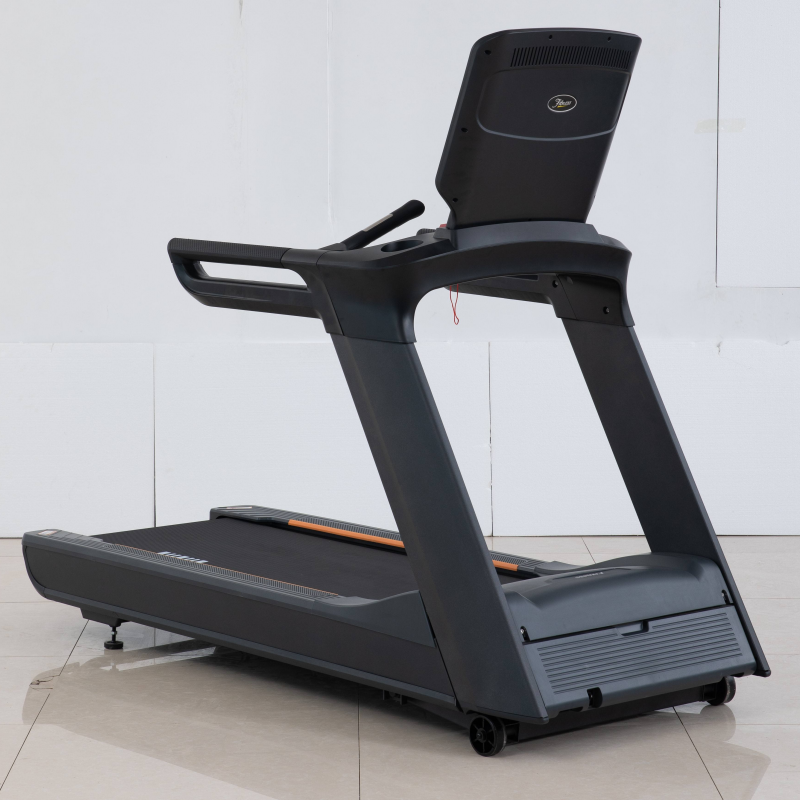
These machines represent the gold standard for heavy facility use. They feature overbuilt frames, heavy-duty AC motors, and massive rollers that reduce belt tension and wear. Consoles are often customizable or completely distraction-free, focusing on core metrics rather than entertainment. They are backed by warranties allowing 10 or more hours of daily usage, often covering parts and labor for multiple years. The main drawback is the high upfront capital expenditure and the large physical footprint required on your floor. However, their longevity makes them the safest operational choice for any serious gym.
When evaluating institutional models, look at the weight of the machine. A unit weighing over 400 pounds indicates thick-gauge steel and heavy internal components. These machines do not shift or bounce, even under a 250-pound user sprinting at 12 miles per hour. They are the foundational pieces of any high-traffic cardio floor.
Many brands use confusing naming conventions to sell retail units to unsuspecting facility owners. These machines offer a lower entry cost and often feature high-definition consumer touchscreens and interactive programming. This appeals to boutique studios with supervised, lower-hour usage. Unfortunately, they are mostly powered by weaker DC motors that cannot handle continuous daily operation. Warranties are frequently voided if run more than 6 hours daily or if placed in a dues-paying facility.
These units often utilize folding frames to save space, which inherently compromises structural integrity. The pivot points become weak links under the stress of heavy footfalls. While they might look impressive with their large screens, the internal components are simply not designed for the rigors of a commercial environment. Use them strictly in controlled, low-volume settings.
Curved manual treadmills are exceptional for interval training. They offer infinite speed adjustments dictated entirely by the user's position on the curve. There are zero electrical requirements, simplifying floor layouts and reducing infrastructure demands. The vulcanized rubber slat-belt construction is exceptionally durable, often lasting over 150,000 miles before needing replacement. They eliminate motor burnout risks completely because there is no motor.
However, they present a steeper learning curve for beginners. The higher perceived exertion may deter casual gym members from using them for steady-state cardio. They are highly specialized tools that excel in functional fitness zones, CrossFit boxes, and athletic performance centers. Integrating a few of these into your layout provides a dedicated space for serious sprinters without tying up your motorized units.
| Treadmill Category | Motor Architecture | Ideal Facility Placement | Expected Lifespan (High Use) | Maintenance Burden |
|---|---|---|---|---|
| Institutional Commercial | AC Motor (4.0+ CHP) | High-traffic 24/7 gyms, Universities | 7-10+ Years | Moderate (Routine lubrication/cleaning) |
| Light-Commercial | DC Motor (3.0 - 4.0 CHP) | Supervised boutique studios, Hotels | 2-4 Years | High (Frequent belt/deck replacements) |
| Non-Motorized Curved | None (Manual Slat Belt) | CrossFit, Athletic Performance Zones | 10+ Years | Low (Bearing checks, cleaning) |
The motor is the beating heart of any motorized cardio unit. AC (Alternating Current) motors are standard in institutional fitness equipment. They handle heat dissipation far better than alternatives because they do not rely on internal brushes that wear down over time. AC motors provide consistent torque at low speeds and maintain power during rapid acceleration. DC (Direct Current) motors are common in home or prosumer units. DC motors struggle with continuous heavy loads, overheat quickly, and require periodic brush replacement.
Continuous Horsepower (CHP) is the only valid metric for evaluation. Ignore peak horsepower marketing claims that only measure short bursts of power before the motor stalls. A true commercial unit requires a minimum of 4.0 CHP to survive daily interval training. Furthermore, examine the motor control board. Industrial boards feature large aluminum heat sinks and dedicated cooling fans to prevent thermal overload during back-to-back usage.
Deck construction dictates the lifespan of the running surface. Reversible phenolic decks allow you to flip the board when one side wears out, effectively doubling the usable lifespan of the component. Proprietary shock absorption systems are designed for high-impact commercial use. They provide firm support and energy return rather than a soft, bouncy feel. Soft residential decks degrade rapidly under heavy commercial use, leading to cracked boards and joint pain for users.
Compare traditional orthopedic belts against vulcanized rubber slat belts. Traditional belts require frequent tensioning, tracking adjustments, and manual lubrication to prevent friction buildup. Slat belts, while carrying a higher upfront cost, run on ball bearings. This eliminates the friction between the belt and the deck, drastically reducing the load on the motor and lowering long-term maintenance requirements.
Interval training requires immediate adjustments to speed and incline. Tactile, quick-touch buttons are an absolute necessity for HIIT training. Touchscreens frequently fail during sweaty, high-speed use, and the cost to replace a massive integrated display can rival the cost of a new machine. You must assess subscription-dependent ecosystems carefully. Many modern machines require active internet connections and paid subscriptions to function fully.
Subscription-free, open-platform interfaces are vastly superior for facility owners. Press-and-go LED interfaces eliminate recurring software overhead and prevent machines from bricking during internet outages. If you want to offer entertainment, consider models with simple tablet holders or secondary screens that do not interfere with the core functionality of the machine.
Look for heavy-duty aluminum or thick-gauge steel frame durability and industrial AC motor reliability. These models offer customizable, subscription-free console options that prioritize core workout metrics. They are best for traditional high-traffic commercial gyms needing reliable, high-uptime motorized interval training. Many come with extensive frame warranties and multi-year parts coverage. They are the workhorses of the fitness industry. You install them, perform basic preventative maintenance, and rarely worry about them failing under pressure.
Key indicators of a heavy-duty standard include massive 3-inch or larger crowned rollers. Larger rollers reduce the RPM required to move the belt, which decreases bearing wear and extends the life of the motor. The running decks are typically 1-inch thick reversible phenolic boards, providing a stable, unyielding surface for heavy runners.
You must critically assess the commercial naming convention here. Evaluate these strictly as light-commercial or boutique home-gym options. Note their heavy reliance on DC motors and mandatory software subscriptions. They are best for supervised personal training studios or low-traffic luxury amenities where interactive programming is preferred over 24/7 durability. Do not place them in high-volume general admission areas, as the constant use will quickly burn out the DC motors and void the limited warranties.
If you choose to implement connected machines, ensure your facility has robust, enterprise-grade Wi-Fi. Dropped connections will log users out mid-workout, causing immense frustration. Factor in the recurring monthly licensing fees per machine when planning your operational budget.
Analyze bearing quality and vulcanized rubber slat durability for these units. They provide massive biomechanical advantages for pure interval work, forcing the user to engage their hamstrings and glutes to drive the belt. They are perfect for athletic conditioning and functional fitness. They are best for CrossFit boxes, athletic performance centers, and dedicated interval class zones. Because the user drives the belt, there is zero motor maintenance for your staff to worry about.
When selecting a manual sprint specialist, test the resistance of the curve. Some models offer magnetic resistance levers that allow users to simulate sled pushes or heavy uphill climbs. This adds massive versatility to the unit, making it a multi-purpose tool for strength and conditioning coaches.
True commercial units draw significant power during operation, especially when accelerating a heavy user from a standstill. Detail the necessity of dedicated 110V/20A or 220V NEMA plug circuits. Sharing circuits will cause breaker trips during peak motor draw, shutting down multiple machines simultaneously. You must audit your electrical panel before ordering equipment. Rewiring a finished gym floor is highly disruptive and expensive.
Hire a licensed commercial electrician to audit your current panel capacity.
Install dedicated 20-amp isolated ground receptacles for each motorized unit.
Ensure proper wire gauge is used to prevent voltage drops over long runs from the breaker box.
Verify that the specific NEMA plug configurations match the power cords of your selected equipment.
High-speed intervals increase the risk of user falls. Outline industry-standard safety clearances for your floor plan. ASTM standards require a minimum of 6 feet of unobstructed space behind the deck. This is critical for high-speed dismounts or accidental falls, preventing users from being pinned against a wall or another machine. Do not cram machines back-to-back to maximize floor space; this is a massive liability.
Side clearances are also important. Allow at least 2 feet between machines so users can safely step off the belt and staff can access the motor hoods for maintenance. A safe, well-spaced cardio machine layout protects members, limits your liability, and creates a more premium feel in your facility.
Even the best equipment requires routine care to survive a commercial environment. Establish realistic schedules for facility staff regarding maintenance. Belt tracking adjustments must be checked weekly to prevent the belt from fraying against the side rails. Deck lubrication schedules vary by manufacturer but are mandatory to prevent friction-induced motor failure. Internal motor housing vacuuming prevents dust buildup and overheating.
| Maintenance Task | Frequency | Responsible Party | Purpose |
|---|---|---|---|
| Wipe down console and handrails | Daily (Multiple times) | Floor Staff / Cleaners | Prevent sweat corrosion and maintain hygiene. |
| Check belt tracking and tension | Weekly | Maintenance Staff | Prevent edge fraying and slipping during sprints. |
| Vacuum under motor hood | Monthly | Maintenance Staff | Remove dust/debris to prevent motor overheating. |
| Lubricate running deck | Quarterly (or per OEM spec) | Certified Technician | Reduce friction and protect the motor control board. |
| Inspect drive belt and rollers | Bi-Annually | Certified Technician | Ensure smooth power transfer and check bearing health. |
Selecting the right equipment dictates the operational flow and profitability of your cardio floor. Heavy-duty AC motors, reversible phenolic decks, and subscription-free consoles provide the durability and uptime required for serious training environments. Avoid retail models masquerading as commercial units, as their DC motors and weak frames will fail under the stress of daily interval sessions. Prioritize mechanical integrity, verify your electrical infrastructure, and commit to strict maintenance schedules to protect your investment.
Audit your facility's electrical panel with a licensed electrician to confirm dedicated 20-amp circuit availability.
Measure your floor plan to guarantee compliance with the required 6-foot rear safety clearances.
Request physical demo periods for high-investment units to test tactile controls and deck stability.
Establish a documented weekly and monthly preventative maintenance checklist for your floor staff.
A: Home models use the word "commercial" strictly for marketing. They feature weaker DC motors, lighter folding frames, and soft decks. Institutional models use heavy-duty AC motors, thick non-folding steel or aluminum frames, and are built to run 10 to 24 hours daily without overheating.
A: It is a premium home unit designed for residential use. It relies on a DC motor and a mandatory software subscription. Its warranty is explicitly voided if placed in a dues-paying facility or used for more than a few hours daily.
A: A true institutional unit requires an AC motor with a minimum of 4.0 Continuous Horsepower (CHP). This ensures it can handle rapid speed transitions, heavy footfalls, and continuous daily operation without thermal overload.
A: Yes, for pure sprinting and athletic conditioning. They allow infinite, instant speed changes dictated entirely by the user's biomechanics. There is no waiting for a motor to accelerate, making them ideal for short, explosive intervals.
A: Yes. Most require a dedicated 110V/20A circuit or a specific 220V connection. Sharing circuits will lead to tripped breakers and potential catastrophic damage to the motor control board during peak power draw.
A: Yes. Many institutional brands offer basic LED or open-platform consoles. These "press-and-go" interfaces eliminate recurring software fees, simplify the user experience, and prevent downtime caused by internet connectivity issues.
A: Placing a light-commercial unit in a dues-paying gym instantly voids the warranty. Exceeding daily hour limits, failing to perform documented preventative maintenance, and plugging units into shared electrical circuits are common violations that void coverage.


