
- All
- Product Name
- Product Keyword
- Product Model
- Product Summary
- Product Description
- Multi Field Search
Views: 0 Author: Site Editor Publish Time: 2026-07-03 Origin: Site


The growing demand in commercial facilities and high-end home gyms for strength training solutions that bridge the gap between fixed-path safety and free-weight biomechanics is undeniable. Facility owners and serious athletes constantly struggle to balance equipment lifespan, maintenance demands, and user biomechanics when selecting a strength training machine. Understanding the exact mechanical advantages, spatial requirements, and structural specifications of a plate loaded machine is necessary for optimizing facility layout, ensuring user adoption, and maximizing equipment return on investment. We see gym floors evolving rapidly, and integrating the right hardware dictates long-term operational success. You need equipment that withstands heavy daily use while delivering precise muscular engagement. This guide breaks down the mechanics, structural requirements, and spatial planning necessary to implement these systems effectively.
Hybrid Biomechanics: Plate loaded equipment combines the natural, converging/diverging movement paths of dumbbells with the stability and safety of a guided machine.
Maintenance Superiority: The absence of cables, pulleys, and selector pins drastically reduces mechanical failure points and long-term maintenance costs.
Infinite Progression: Utilizes standard Olympic plates for weight resistance, allowing for precise micro-loading and exceptionally high maximum load capacities.
Spatial Trade-offs: Requires a larger operational footprint than selectorized machines due to the necessity of weight plate storage and loading clearance zones.
Cost-Effectiveness: Often features a lower upfront unit cost compared to selectorized equipment, though total budget planning must account for weight plate inventory.
The foundation of any plate loaded system relies heavily on the principles of leverage and pivot mechanics. Unlike traditional cable systems that provide constant tension, these machines utilize a fixed pivot point and a rigid moment arm. The placement of the load relative to the pivot point dictates the actual force required to move the weight. As you push or pull through the range of motion, the angle of the moment arm changes. This naturally alters the perceived load. This dynamic shift in weight resistance allows the machine to match the natural strength curve of human muscles. We design gym layouts knowing that lifters need maximum resistance where they are mechanically strongest. The lever arm length and the starting angle determine the exact resistance profile. Engineers calculate these angles to ensure the weight feels heavier at the peak of contraction and lighter at the weakest joint angles. This mechanical advantage reduces joint stress while maximizing muscle fiber recruitment.
| Mechanical Feature | Plate Loaded System | Traditional Cable System |
|---|---|---|
| Resistance Profile | Variable based on moment arm angle | Constant tension throughout movement |
| Pivot Mechanism | Heavy-duty bearings and solid steel axles | Pulleys, cables, and guide rods |
| Load Placement | Directly on weight horns attached to lever | Centralized weight stack lifted via cable |
| Friction Level | Extremely low (bearing dependent) | Moderate to high (cable and rod friction) |
Modern equipment engineering has moved far beyond simple linear tracks. High-quality machines utilize converging and diverging arcs to replicate the natural movement of human joints. Converging paths bring the hands closer together during pressing movements. This maximizes chest and shoulder contraction. Diverging paths spread the hands apart during pulling movements, fully engaging the latissimus dorsi and upper back. Iso-lateral mechanics allow each arm or leg to move independently. This independent movement prevents the dominant limb from compensating for the weaker one. It effectively targets and corrects muscular imbalances. When you train on a rigid, single-axis machine, your joints are forced into an unnatural linear path. Converging and diverging arcs eliminate this issue. They allow the wrists, elbows, and shoulders to track naturally. This reduces the risk of repetitive strain injuries. Facility operators prioritize these biomechanics because they cater to a wider range of body types and mobility levels.
Assess the user's natural pressing arc using dumbbells to identify their optimal converging path.
Adjust the machine's seat height to align the shoulder joint directly with the primary pivot axis.
Execute the movement, ensuring the hands converge smoothly at the peak of the concentric phase.
Monitor the eccentric phase to ensure the diverging return path does not overstretch the anterior capsule.
Manufacturers carefully engineer pivot points to align with human biomechanics. By adjusting the starting angle and the trajectory of the moment arm, the machine provides maximum resistance at the exact point where the muscle is mechanically strongest. The resistance decreases at vulnerable joint angles where the muscle is fully stretched or fully contracted. This precise alignment maximizes mechanical tension and metabolic stress. These are two primary drivers for muscle hypertrophy. It simultaneously protects the joints from unnecessary strain. For example, in a chest press machine, the resistance is slightly lower at the bottom of the movement where the pectoral muscles are fully stretched and vulnerable. As you press outward and the arms extend, the mechanical advantage shifts, and the resistance increases to challenge the triceps and chest at their strongest point. This variable resistance curve is impossible to replicate perfectly with standard free weights.
One of the most significant advantages for individual lifters is the inherent safety profile of these systems. Training to muscular failure with heavy free weights typically requires a human spotter to prevent injury. A plate loaded system eliminates this requirement by incorporating physical safety stops and variable catch positions. If a lifter fails a repetition, the machine simply rests on the safety stop. This prevents the weight from crushing the user. Athletes can safely push their limits during high-threshold training sessions without relying on external assistance. The rigid frame dictates the exact path of the weight. There is no risk of the load shifting laterally or falling forward. This controlled environment is ideal for rehabilitation settings, high-intensity interval training, and heavy strength phases where central nervous system fatigue might compromise stabilizing muscles.
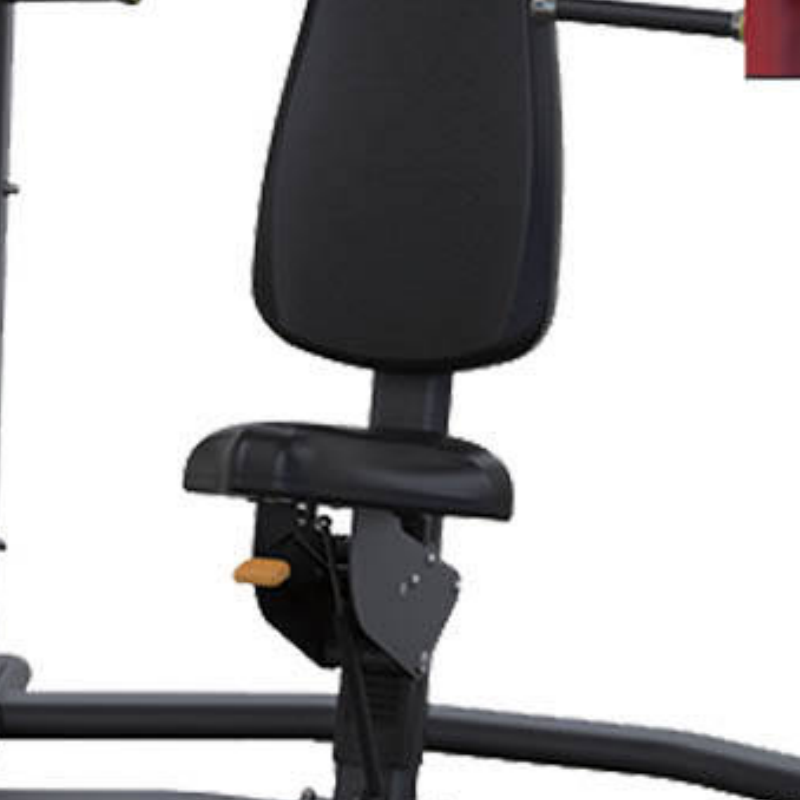
When evaluating durability, the structural simplicity of plate loaded systems offers a distinct advantage over selectorized alternatives. Selectorized machines rely on a complex network of cables, pulleys, guide rods, and selector pins. These components experience constant friction. They require regular lubrication, tension adjustments, and eventual replacement. Plate loaded designs utilize heavy-duty bearings and solid steel pivot points. The absence of cables drastically reduces mechanical failure points. This results in significantly lower long-term maintenance requirements and superior uptime for the facility. A snapped cable on a selectorized machine renders it unusable until a technician arrives. A plate loaded unit rarely experiences catastrophic failure. Routine maintenance simply involves wiping down the upholstery and occasionally checking the torque on the main pivot bolts. This reliability makes them a staple in high-traffic commercial environments.
Selectorized machines are inherently limited by the size of their fixed weight stacks. Advanced lifters frequently outgrow the maximum capacity of standard pin-loaded equipment. This renders the machine obsolete for their training needs. Plate loaded systems offer exceptionally high capacity ceilings. They often accommodate hundreds of pounds per limb. They allow for precise micro-loading. Users can easily add 2.5lb or 1.25kg plates to the weight horns. This facilitates gradual and consistent strength progression that is impossible on machines with fixed 10lb or 15lb increments. When an athlete hits a plateau, the ability to increase the load by a mere fraction of a pound is critical for continued adaptation. The extended weight horns on commercial units are specifically designed to hold multiple 45lb or 25kg plates, ensuring that even elite powerlifters and bodybuilders can achieve adequate stimulus.
Standard selectorized stacks typically max out between 200 and 300 pounds.
Commercial plate loaded leg presses can often hold in excess of 1,000 pounds.
Micro-loading allows for 1% to 2% load increases, ideal for linear periodization.
Weight horns must be spaced adequately to accommodate the diameter of bumper plates if used.
The learning curve and user experience differ significantly between the two modalities. Selectorized machines offer unparalleled convenience for beginners. Changing the resistance requires nothing more than moving a pin. Plate loaded systems demand physical effort to manually load and unload heavy cast iron or bumper plates. Coaches frequently utilize plate loaded equipment as a highly effective transitional training tool. They allow users to practice heavy compound movements with a guided path. This builds foundational strength and muscle memory before transitioning to raw barbell and dumbbell exercises. The tactile experience of loading plates also provides a psychological benefit. It connects the lifter to the actual weight being moved. However, facility managers must ensure that users adhere to proper gym etiquette by stripping the machines after use, as leaving heavy plates on the horns creates an accessibility barrier for the next user.
Procuring strength equipment requires a thorough analysis of upfront costs and secondary inventory requirements. The initial purchase price of a plate loaded frame is generally lower than a comparable selectorized machine. You are not paying for the cast iron weight stack, the guide rods, or the complex pulley mechanisms. You are simply buying the engineered steel frame and the upholstery. However, you must factor in the secondary cost of Olympic weight plate inventory. A facility heavily outfitted with these machines requires thousands of pounds of free weights to ensure users are not constantly searching for plates. You must calculate the exact plate-to-machine ratio required for your specific floor plan. Investing in high-quality urethane or rubber-coated plates prevents damage to the machine's weight horns and reduces ambient noise on the gym floor.
The structural integrity of the frame dictates the lifespan and safety of the equipment. Commercial environments require frames constructed from robust 11-gauge steel to withstand constant heavy usage. Continuous, heavy-duty welds are essential for preventing structural fatigue at critical junction points. The finishing process matters immensely. High-quality electrostatic powder-coating provides a durable barrier against rust, chipping, and corrosive sweat. This ensures the equipment maintains its structural and aesthetic integrity over years of intense use. When inspecting a machine, look closely at the weld beads. They should be uniform and free of porosity. The steel tubing should be thick enough to resist denting from dropped plates. Bolted joints must utilize high-tensile hardware with nylon-insert lock nuts to prevent loosening from vibration.
The smoothness of the movement path is entirely dependent on the quality of the pivot mechanics. Budget equipment often utilizes standard brass or plastic bushings. These degrade quickly and create a grinding sensation under heavy loads. Premium commercial machines feature commercial-grade pillow block bearings or sealed ball bearings. These high-quality bearings ensure frictionless movement. They allow the resistance to remain consistent and smooth even when the machine is loaded to its maximum capacity. Sealed bearings keep dust, chalk, and moisture out of the rolling elements. This eliminates the need for constant greasing. When testing a machine, load it to at least 80% of its capacity and move the lever arm slowly. Any catching, grinding, or lateral play indicates inferior bearing quality or improper alignment.
| Component | Commercial Grade Standard | Budget/Residential Standard |
|---|---|---|
| Steel Tubing | 11-gauge (3mm thick) | 14-gauge or 16-gauge (thinner) |
| Pivot Bearings | Sealed pillow block / ball bearings | Brass or plastic bushings |
| Upholstery | Double-stitched, high-density foam | Single-stitched, low-density foam |
| Finish | Electrostatic powder coat | Standard liquid paint |
User comfort and proper positioning are critical for effective biomechanics. Seat pads must be constructed from high-density foam that resists compression over time. They should be covered in wear-resistant, double-stitched upholstery. Gas-assisted seat adjustments allow users of varying heights to quickly and safely align their joints with the machine's pivot points. Multi-grip handle configurations are vital. Providing neutral, pronated, and supinated grip options accommodates varying user shoulder mobilities. It allows for targeted muscle isolation. Footplates on leg machines must feature high-traction surfaces to prevent slipping under heavy loads. The contact points where the user interacts with the machine dictate the overall feel of the exercise. Poor ergonomics lead to joint pain and decreased user adoption, regardless of how well the machine is built.
Integrating these machines requires careful spatial planning. Facility managers must calculate the true operational footprint. This extends far beyond the static dimensions of the machine itself. Substantial clearance zones are required on all sides. Users must safely carry, load, and unload heavy plates without interfering with adjacent equipment or walkways. Failing to account for this loading clearance creates severe safety hazards and bottlenecking during peak operational hours. You need at least 36 inches of clearance around any weight horn. This allows a user to stand squarely, grip a 45lb plate with both hands, and slide it onto the horn without twisting their spine. Cramming machines too close together guarantees that the equipment will be underutilized and increases the risk of dropped plates causing injury.
Measure the static length and width of the machine fully assembled.
Add a minimum of 36 inches to any side featuring a weight loading horn.
Account for the maximum extension of the lever arms during the exercise's range of motion.
Ensure the entry and exit pathways to the machine's seat remain unobstructed.
Deploying this equipment necessitates a comprehensive weight plate inventory strategy. Facilities must purchase adequate quantities of Olympic plates to service the machines simultaneously. Managers must evaluate whether to select machines with integrated weight storage horns or to invest in standalone plate trees. Integrated storage keeps plates readily accessible and improves floor organization. It increases the overall footprint of the individual machine. Standalone trees save space on the machine frame but require users to carry heavy plates across the gym floor. A hybrid approach often works best. Equip heavy compound machines like leg presses with integrated storage, and use centralized plate trees for smaller upper-body isolation machines. You must maintain a strict organizational system to prevent the gym floor from becoming cluttered and dangerous.
The concentrated weight of fully loaded machines, combined with the inevitable dropping of heavy plates, places significant stress on facility flooring. Managers must assess sub-floor load-bearing capacities before installation. High-density rubber flooring, typically 15mm to 20mm thick, is absolutely necessary in heavy plate-loaded zones. This specialized flooring mitigates structural damage. It dampens acoustic vibrations and protects the weight plates from premature degradation. Concrete sub-floors can crack under the repeated impact of dropped cast iron. Elevated floors require structural reinforcement to handle the static load of multiple machines loaded with thousands of pounds. Consult with a structural engineer if you are installing a heavy strength zone on a second-story floor or above a basement.
Audit your current gym machine guide and facility layout to identify gaps in your strength training offerings. Calculate the exact plate-to-machine ratio required for your expected peak capacity to avoid inventory shortages. Request detailed technical specification sheets for all shortlisted models to verify the steel gauge and bearing quality before issuing purchase orders. Map out the operational footprint on your floor plan, ensuring a minimum 36-inch clearance around all loading zones. Finally, inspect your sub-floor and upgrade to 15mm high-density rubber flooring in all designated heavy lifting areas.
A: It is a strength training machine that uses manually loaded weight plates on a fixed or iso-lateral pivot system to provide resistance. Users physically slide standard Olympic plates onto the machine's weight horns to set their desired load.
A: They offer a hybrid benefit rather than being strictly better. They provide similar biomechanical arcs and deep muscle engagement to free weights, but with the added stability, guided path, and built-in safety mechanisms of a machine.
A: Yes. They are engineered with specific resistance curves and iso-lateral movements that force deep muscular engagement. This allows users to safely train to muscular failure, maximizing mechanical tension and metabolic stress for optimal hypertrophy.
A: Commercial models feature exceptionally high load capacities, often holding upwards of 400 to 800 lbs per arm or leg. The maximum capacity is primarily limited by the length of the weight horns and the machine's steel gauge.
A: Iso-lateral machines allow independent movement for each limb, which prevents the dominant side from compensating and helps correct strength imbalances. Standard machines move both limbs together on a single, unified axis.
A: Yes, the vast majority of commercial plate-loaded equipment requires standard 2-inch Olympic weight plates. Standard 1-inch plates will not fit over the heavy-duty weight horns used on commercial frames.
A: Yes. They offer significant safety advantages over standard barbells by incorporating built-in mechanical safety stops and fixed starting positions, allowing users to safely push to failure without risking being crushed by the weight.


