
- All
- Product Name
- Product Keyword
- Product Model
- Product Summary
- Product Description
- Multi Field Search
Views: 0 Author: Site Editor Publish Time: 2026-04-24 Origin: Site


Connected home fitness equipment has revolutionized how we train indoors over the last few years. Among these modern innovations, machines featuring large interactive displays command a notable premium on the market. Continuous stair climbing delivers an unmatched, hyper-focused lower-body burn. However, the movement is notoriously grueling and can quickly become monotonous during long endurance sessions. Adding immersive streaming solutions and virtual classes promises to cure this persistent cardio boredom.
This guide evaluates whether the software reliability, sheer physical footprint, and specialized mechanics justify choosing this smart tech over versatile airbikes or basic steppers. You will learn exactly what to look for before committing to such a highly specialized piece of equipment. We will explore the critical structural realities you must consider for successful home installation. By the end, you can objectively decide if this premium investment aligns seamlessly with your personal fitness goals.
The Tech Trade-off: Screen-casting solves the "boredom" and psychological friction of long steady-state cardio, but introduces software dependencies (e.g., app crashes, boot times).
Space is the Ultimate Filter: True continuous stair climbers require strict adherence to the "8-foot ceiling rule," unlike compact pedal steppers.
Hardware Over Gimmicks: A built-in screen shouldn't distract from core mechanics—look for floating step designs, infrared safety sensors, and welded steel frames.
Versatility vs. Specificity: A stair climber is highly specialized for posterior chain endurance (the "hiking vibe"); buyers wanting upper-body engagement should look to mixed-modality machines instead.
Stair climbing presents a unique psychological challenge. Unlike heavy weightlifting or high-speed running, the barrier to begin a session remains quite low. You simply step on and start moving. Yet, the perceived exertion skyrockets within minutes. Pushing your entire body weight upward repeatedly demands massive oxygen delivery to the glutes and quadriceps. Because this focused effort feels incredibly demanding, users often cut their workouts short out of sheer boredom and fatigue.
Interactive technology steps in as a critical retention tool. When you use a Screen-Casting Stair Climber, the built-in media center distracts your brain from the physical discomfort. Watching a favorite Netflix series, streaming Spotify playlists, or following on-demand instructor classes helps you push through a 45-minute Zone 2 endurance session. Distraction becomes a highly effective strategy for long-term consistency.
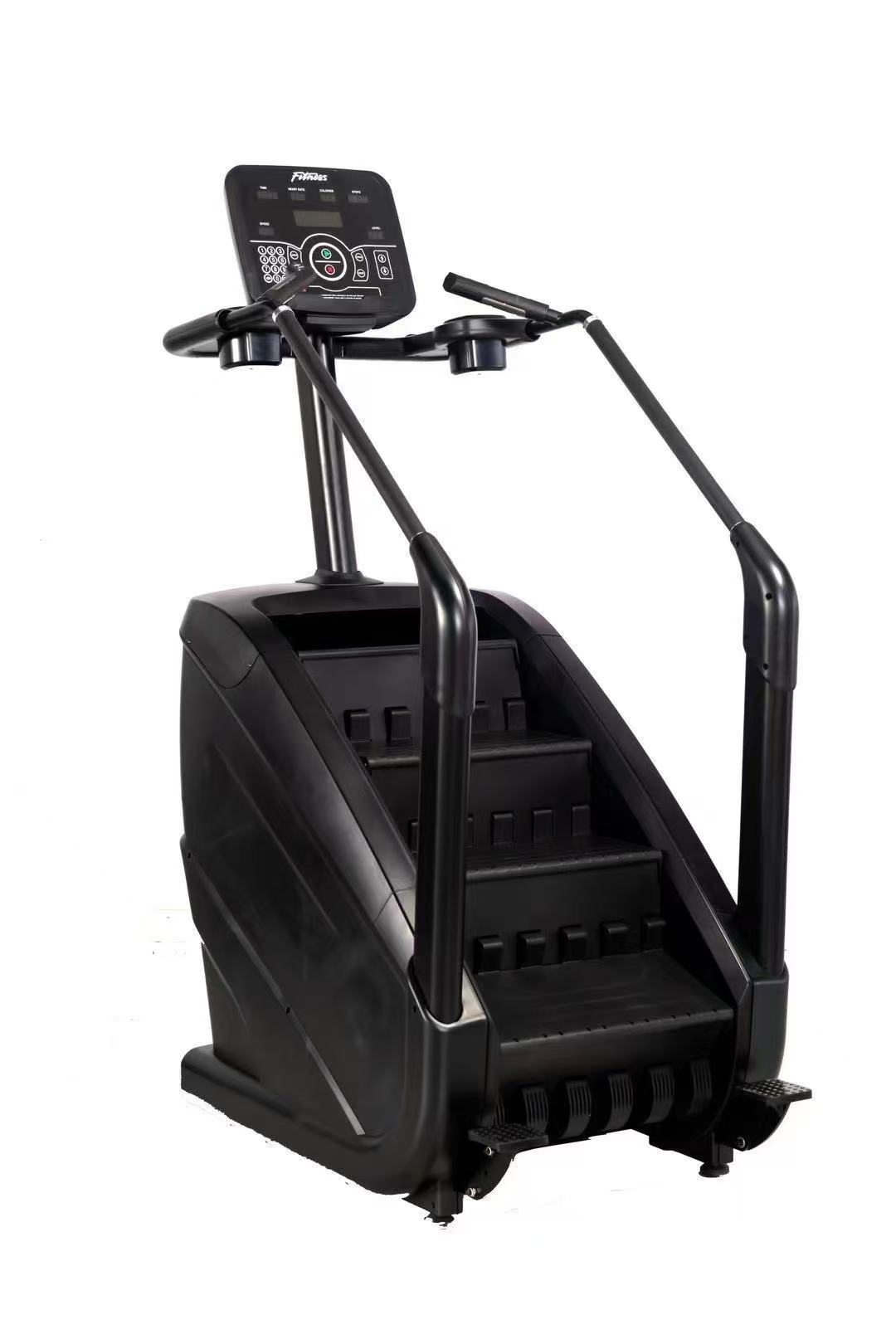
To understand the market, we must clearly categorize the available equipment. The industry generally splits into two distinct mechanical designs:
Continuous Escalating Tracks: These feature a rotating set of stairs resembling an escalator. They deliver a true climbing simulation. You will almost exclusively find large touchscreens and casting capabilities on these premium models.
Hydraulic or Magnetic Steppers: These rely on two independent pedals. Your feet never leave the pads. They remain compact and budget-friendly but rarely include native streaming hardware.
Buyers often face a common hesitation, frequently debated in online fitness communities. They wonder if they should sacrifice the full-body versatility of an airbike or elliptical for such a singular, lower-body focus. An airbike allows you to push using your arms when your legs tire. A Stair Climber offers no such relief. It forces a hyper-focused posterior chain burn. Choosing to invest in this machine means you highly prioritize lower-body endurance over mixed-modality versatility.
A glowing high-definition console looks impressive in a showroom. However, daily use quickly reveals the true value of these smart features. You must carefully assess how the manufacturer handles streaming integration. Some brands build open ecosystems supporting native applications like YouTube, Netflix, and web browsers right out of the box. Others lock you into closed, proprietary subscription networks. If a machine requires a $40 monthly fee just to unlock basic screen functionality, your hardware effectively becomes a brick when you cancel the subscription.
Software stability often clashes against hardware reliability. The fitness industry struggles repeatedly with poorly optimized Android operating systems running on underpowered console chips. Users frequently document frustrating pain points. Apps crash mid-workout. Touchscreens become unresponsive when exposed to heavy sweat. When a machine freezes, performing a hard physical reboot often requires toggling a switch near the floor and waiting up to a minute for the system to boot back up. These software interruptions can ruin a perfectly paced high-intensity interval training (HIIT) session.
Screen ergonomics matter just as much as app selection. During intense climbs, users naturally lean forward. If the manufacturer mounts the display too low, you will constantly strain your neck downward. Poor posture restricts breathing and limits oxygen intake. Some modern units attempt to solve this by using 360-degree rotating consoles. You can pivot the screen to follow off-machine floor workouts. However, you must test the primary viewing angle first. A fixed console positioned at eye level often provides a superior, posture-friendly climbing experience.
Space remains the ultimate filter for any home gym enthusiast. Before checking software specs, you must verify your room dimensions. True continuous track machines require strict adherence to the "8-foot ceiling rule."
This rule relies on basic mathematics. You must calculate the highest point of the top step, add your own height, and factor in overhead clearance. If a machine's top step sits 24 inches off the floor, and you stand 72 inches tall, your total operating height reaches 96 inches. A standard eight-foot ceiling measures exactly 96 inches. In this scenario, your head would graze the plaster. Always ensure you have at least six inches of extra clearance above your highest bouncing point.
Step mechanics dramatically impact both the machine's footprint and your joint health. Commercial machines typically feature step heights ranging between six and nine inches. To fit underneath standard residential ceilings, home models often reduce this step height to roughly 5.2 inches. This shorter height creates a low-impact, knee-friendly "hiking vibe" rather than a steep urban stairwell feel.
Step depth requires equal attention. Shallow steps present a significant problem for larger-footed users. If you wear US Size 12 shoes or larger, a narrow step forces your toes to hang off the front edge. Premium models solve this through a "floating step" design. The front edge of each pedal remains open and unobstructed, preventing toe-pinching and allowing a natural foot strike.
Feature | Commercial Standard | Premium Home Compact |
|---|---|---|
Average Step Height | 6 to 9 inches | 5 to 6 inches (Hiking Vibe) |
Step Depth Design | Deep, fixed-end steps | Shallower, often uses floating step |
Ceiling Requirement | 9 to 10 feet minimum | 8 feet (strictly calculated) |
Total Weight | 450+ lbs | 250 - 350 lbs |
Portability presents another harsh reality. Moving a lightweight pedal stepper takes minimal effort. Moving a welded steel continuous climber requires serious planning. These automated track machines often exceed 400 pounds. They house heavy-duty drive chains and oversized alternating current (AC) motors. You cannot easily drag them across carpet. Installation usually requires a dedicated space where the machine will live permanently.
The internal drive system dictates the machine's lifespan. You must contrast commercial-grade motors against residential versions. Health clubs buy units featuring motors rated for 10,000 to 15,000 hours of continuous use. High-end home models typically utilize motors rated for 1,500 to 3,000 hours. A rotating staircase demands a vastly superior, high-torque motor compared to a simple hydraulic pedal machine. Lifting a 200-pound human vertically without stuttering requires immense, consistent power.
Safety features remain non-negotiable, especially in environments shared by children or pets. Automated track machines introduce pinch points where the descending stairs disappear into the base housing. You must prioritize models equipped with infrared safety sensors. These optical beams span the bottom of the track. If a pet wanders underneath, or a dropped towel breaks the beam, the machine triggers an immediate auto-stop mechanism. Do not purchase a rotating track machine for a family home without this specific hardware.
Warranties serve as a reliable benchmark for build quality. The fitness industry maintains a clear standard for premium cardio equipment. You should expect a minimum 10-year warranty on the welded steel frame. Moving parts and electronics generally carry a 1-to-2-year guarantee. If a manufacturer offers less than five years on a heavy-duty frame, consider it a significant red flag regarding their welding and steel gauge choices.
Many buyers explore the used market hoping to score a commercial unit at a discount. This path hides numerous traps. When inspecting a second-hand unit, you must remove the side panels. Check the internal housing for metal shavings scattered near the base. Shavings indicate failing bearings or a misaligned chain drive. Furthermore, check the console software. Five-year-old proprietary touchscreens often lose developer support, leaving you staring at an outdated interface incapable of streaming modern apps.
Making a final purchasing decision requires separating your actual fitness habits from aspirational goals. These machines demand a high premium in both cash and floor space. Use the following criteria to determine if this equipment belongs in your home.
You have measured your room and confirmed the mathematical requirements for ceiling height.
You prioritize targeted lower-body endurance and intense glute development.
You struggle heavily with cardio boredom and rely on media distraction to finish long sessions.
You have the budget to afford a premium footprint without compromising on safety sensors.
You suffer from joint mobility issues in your ankles or hips, making continuous stepping painful.
You require upper-body conditioning to maximize limited workout time.
You lack dedicated, permanent floor space.
If you fall into the second group, direct your focus toward folding magnetic mini-steppers or versatile airbikes. They provide excellent cardiovascular benefits while respecting spatial limitations.
Home units utilize shorter step heights to accommodate low ceilings. Sometimes, advanced athletes find these 5-inch steps lack the steep intensity of commercial gym models. To achieve that brutal commercial-gym intensity without maxing out the machine's speed (Steps Per Minute), wear a weighted rucking bag or a tactical weight vest. Adding 20 pounds of static weight forces your legs to work significantly harder at a slower, safer pace. This method maximizes your metabolic output while keeping the machine's motor running smoothly at a moderate RPM.
User Profile | Primary Goal | Recommended Equipment |
|---|---|---|
Boredom-Prone, Space-Rich | Long steady-state cardio, glute focus | Screen-Casting Track Climber |
Space-Restricted, Budget-Conscious | Daily movement, light sweat | Hydraulic/Magnetic Mini Stepper |
HIIT Enthusiast, Wants Full Body | Maximum calorie burn in minimum time | Airbike or Rower |
Joint Pain Sufferer | Low-impact heart health | Recumbent Bike or Elliptical |
A screen-casting stair climbing machine represents a luxury, highly specific fitness investment. It effectively solves the psychological friction associated with grueling lower-body endurance routines. Integrating media and streaming classes transforms a tedious climb into an engaging, dynamic workout. This technology layer significantly boosts long-term user retention.
However, you cannot let flashy touchscreens distract you from foundational mechanics. Your final purchasing decision must remain rooted in structural realities. Measure your ceiling clearance twice. Verify the step depth accommodates your shoe size through a floating step design. Ensure the frame carries an adequate warranty and includes essential infrared safety sensors. By prioritizing hardware reliability alongside software integration, you secure a powerful tool for your lifelong fitness journey.
A: No. Spot-treating fat is a physiological myth. However, these machines engage the body's largest muscle groups, including the glutes and quadriceps. This massive muscle recruitment drives high caloric expenditure. Over time, creating a consistent calorie deficit contributes to overall systemic fat loss, which eventually reduces belly fat.
A: They are generally low-impact compared to running on pavement. However, the repetitive climbing motion can aggravate existing patellar issues. Home models featuring lower step heights around five inches are generally more joint-friendly than steep commercial stairs. Always consult a physical therapist if you experience sharp joint pain.
A: Magnetic resistance relies on magnets moving closer to a metal flywheel. Found in premium models, it is frictionless, extremely quiet, and offers precise control. Hydraulic or spring resistance is cheaper and highly portable. However, hydraulic cylinders can feel inconsistent and lose resistance as the fluid heats up during long workouts.
A: It depends entirely on the brand. Always verify the manufacturer's software policy before buying. Look for machines allowing native streaming like Netflix or open web browsing on their basic free tier. Otherwise, your expensive screen might become a useless brick without maintaining an active monthly class subscription.


