
- All
- Product Name
- Product Keyword
- Product Model
- Product Summary
- Product Description
- Multi Field Search
Views: 0 Author: Site Editor Publish Time: 2026-04-26 Origin: Site


Many gym-goers feel intense frustration when comparing cardio machine displays side by side. You often notice an elliptical or a treadmill console reporting exceptionally high calorie burns. This creates unnecessary confusion during the equipment evaluation process. The underlying problem lies in the stark difference between calculated calorie burn and true metabolic calorie burn. Calculated burn relies on deeply flawed machine algorithms. Metabolic burn reflects your actual physiological exertion and real oxygen demand. For buyers evaluating a Classic Stair Climber for their home gym or an advanced training protocol, this guide provides absolute clarity. We break down the core biological mechanics and present authentic calorie expenditure data. You will learn the exact evaluation criteria needed. This actionable knowledge helps you determine if the equipment is the right investment for your specific fitness goals.
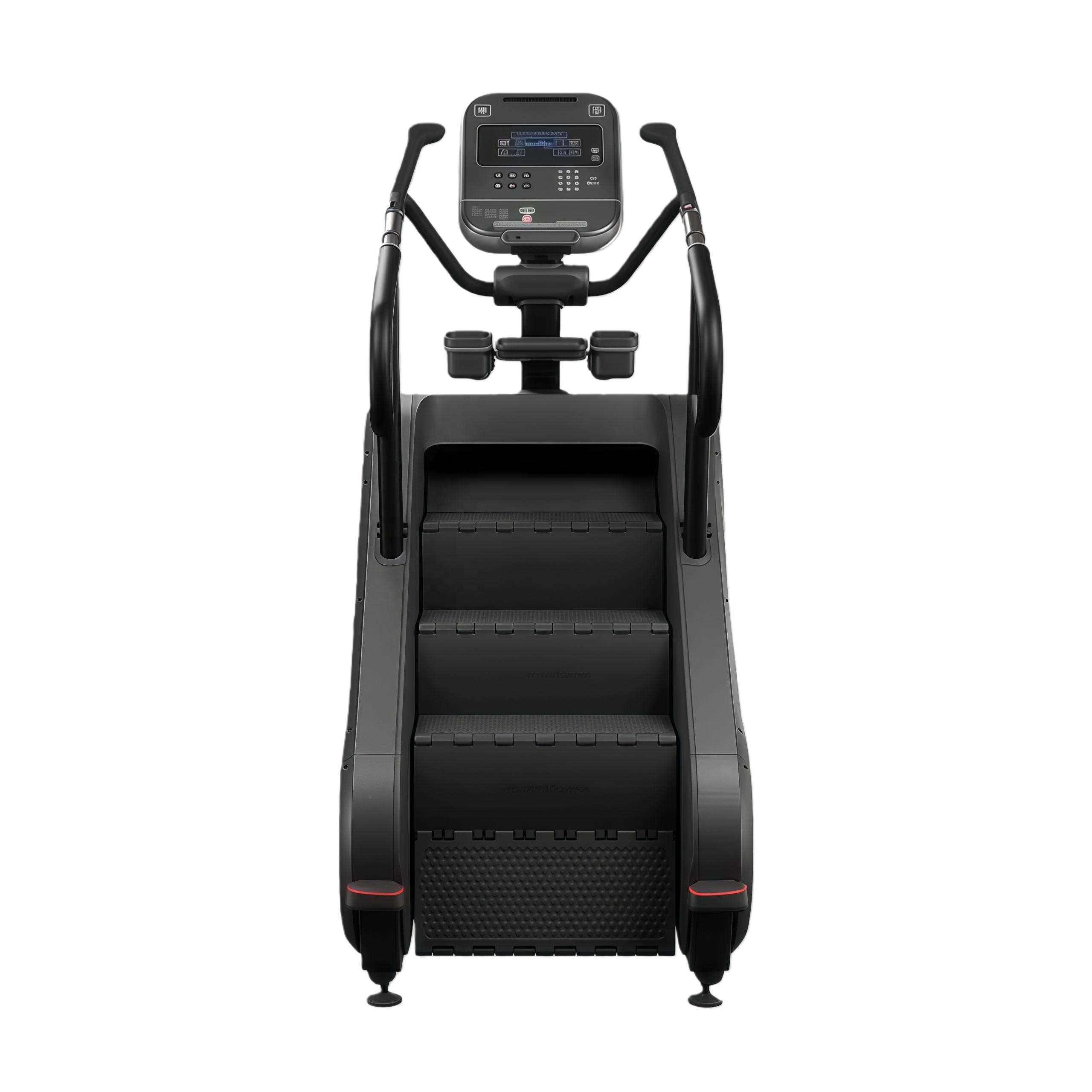
MET Baseline: A classic stair climber operates at a high Metabolic Equivalent of Task (MET) value of around 9.0, meaning it demands significantly more energy per minute than flat-surface walking or cycling.
The "Cheating" Variable: Machine calorie counters assume perfect form; leaning on handrails can reduce actual calorie expenditure by up to 30%.
Time ROI: Due to vertical gravity resistance, a classic stair climber yields a higher Rate of Perceived Exertion (RPE) and triggers greater "afterburn" (EPOC), maximizing efficiency for short-duration workouts.
Dual-Purpose Machine: It bridges the gap between pure cardiovascular conditioning and lower-body resistance training (glutes, hamstrings, quads).
To understand true calorie burn, you must thoroughly examine the physics of vertical displacement. Many standard cardio machines actually perform a large portion of the mechanical work for you. A motorized treadmill continuously pulls the running belt beneath your feet. An elliptical trainer relies heavily on the built-up momentum of its internal flywheel. In sharp contrast, a revolving stair machine forces you to physically lift your entire body weight against gravity. Every single upward step requires raw, unassisted mechanical output. You cannot rely on passive momentum to carry your body upward. You fight gravity constantly.
Exercise physiologists utilize the Metabolic Equivalent of Task (MET) standard to accurately measure human energy expenditure. One MET equals the baseline energy you naturally burn while resting quietly. Stair climbing hits an incredibly intensive MET score of approximately 9.0. This formidable score massively outperforms brisk flat-surface walking, which hovers around 4.3 METs. It also easily beats standard stationary cycling. We can observe these stark physiological differences clearly when comparing common cardio modalities side by side.
Exercise Modality | Average MET Value | Energy Demand Level |
|---|---|---|
Brisk Walking (Flat Surface) | 4.3 | Low-Moderate |
Stationary Cycling (Light Effort) | 5.5 | Moderate |
Elliptical Trainer (Moderate Effort) | 5.0 - 6.0 | Moderate |
Revolving Stair Climbing | 9.0 | Vigorous |
Connecting active muscle mass to total calorie burn reveals another crucial biological factor. Your body houses its absolute largest, most powerful muscle groups in the lower half. The gluteus maximus, quadriceps, and hamstrings require massive amounts of freshly oxygenated blood during active contraction. Engaging these giant muscle complexes repeatedly exponentially increases your overall systemic oxygen demand. Higher oxygen demand directly and predictably translates to greater caloric expenditure per minute. You effectively transform your daily cardiovascular session into a brutal lower-body resistance workout. The physiological toll is immense, and your body rewards this intense effort by burning a massive amount of stored energy.
Machine algorithms frequently mislead well-intentioned users. An elliptical console might proudly display a massive calorie number after a standard 30-minute session. These generic algorithms factor in sweeping arm movements and much faster pedal cycle rates. However, they frequently overestimate the actual, real-world metabolic impact on your body. You move your limbs quickly, but the machine structure bears almost all your actual body weight. The distinct lack of true gravitational resistance means you burn far fewer actual calories than the bright screen suggests.
Rate of Perceived Exertion (RPE) offers a much more honest and accurate measurement tool. Twenty minutes on a revolving stepped platform feels significantly harder than twenty minutes on a flat treadmill belt. Your genuine physiological fatigue provides vastly better feedback than a generic digital console. When you feel your heart pounding heavily and your legs burning deeply, you are exerting real, measurable energy. RPE aligns very closely with your true metabolic output. If a cardio exercise feels incredibly easy, it likely burns very few calories.
We must also aggressively address the most common user failure point. The dreaded "form penalty" completely destroys your potential calorie burn. Many people predictably succumb to the handrail trap as deep fatigue sets in. They transfer their upper body weight heavily onto the display console or side rails. Hunching forward over the display removes the heavy physical load from your active lower body. This remarkably poor posture drastically reduces your actual calorie burn. The digital screen might still display a highly impressive number, but your biological system knows the actual truth.
Common Posture Mistakes to Avoid:
Resting your elbows entirely on the plastic display console.
Locking out your elbows rigidly while leaning heavily on the side rails.
Taking tiny micro-steps instead of utilizing the full, deep stair depth.
Looking down constantly, which forces your spine out of healthy alignment.
The true metabolic value of a vertical climbing workout extends far beyond the active clock. Exercise scientists professionally call this biological phenomenon Excess Post-exercise Oxygen Consumption (EPOC). Many everyday fitness enthusiasts simply call it the powerful "afterburn effect." You do not just burn calories during your active, sweaty exertion phase. A highly intense vertical session essentially forces your body to consume extra oxygen during the long recovery phase. You continue burning valuable calories for several hours after stepping off the heavy equipment.
Applying structured interval training protocols amplifies this metabolic shift significantly. High-Intensity Interval Training (HIIT) creates a severe, highly beneficial metabolic deficit. You can easily execute this training by manually manipulating the machine's resistance levels. The body must work overtime afterward to fully restore its normal resting homeostasis. This systemic restoration process demands heavy fuel.
Sample 20-Minute HIIT Protocol:
Warm up steadily at level 3 or 4 for exactly five minutes.
Increase the machine abruptly to level 10 for sixty seconds of maximum effort.
Drop the speed back down to level 4 for ninety seconds of active recovery.
Repeat this heavy exertion and recovery cycle exactly six times.
Cool down completely at level 3 for a final five minutes.
For busy working professionals, evaluating heavy cardio equipment absolutely requires looking at the time-to-output ratio. Time is frequently your most precious daily commodity. If you only have twenty or thirty sparse minutes available, you need the maximum possible return on investment. The heavy climbing movement provides the absolute highest ROI for short-duration training sessions. You achieve a near-maximal heart rate much faster than you ever would walking swiftly on a flat surface.
Comparing physical impact forces and primary training outcomes helps quickly clarify your ultimate purchasing decision. Treadmills remain clearly superior for actual outdoor race preparation and varied pacing strategies. Marathon runners desperately need treadmills to accurately simulate outdoor road conditions. However, treadmills unfortunately generate significant, repetitive landing shock on your vulnerable knees and ankles. Climbing revolving stairs offers incredibly low joint impact by comparison. You never experience a harsh, damaging eccentric landing shock. You simply step upward, smoothly building superior lower-body strength in a vastly safer manner.
The ongoing debate between full-body and lower-body engagement often centers around ellipticals. Ellipticals do partially engage the upper body through pushing and pulling moving handles. They also offer a remarkably smooth, true zero-impact physical experience. Yet, a standard Stair Climber heavily forces true weight-bearing resistance. Intense weight-bearing exercise is absolutely essential for safely maintaining proper bone density over time. It also provides highly targeted glute and heavy leg sculpting you simply cannot achieve on freely floating elliptical pedals.
Buyers need a very clear decision framework for shortlisting heavy gym equipment. Choose the vertical climber if your primary goals are time-efficient high-intensity cardio and heavy glute hypertrophy. It also offers excellent footprint efficiency for smaller home gyms. Opt for alternative machines if you strictly require flat-plane rehabilitation for previous joint injuries. You should also deeply consider alternatives if you greatly prefer low-RPE endurance training over intense, short physical bursts.
Shortlisting Checklist for Home Buyers:
Measure your exact ceiling height to guarantee adequate vertical head clearance.
Assess your current knee health, hip flexibility, and ankle mobility.
Determine whether your weekly routine strongly favors long endurance or quick HIIT sessions.
Evaluate the actual floor space you can dedicate permanently to a heavy machine.
We must remain highly transparent about the surprisingly high physical barrier to entry. Complete beginners often heavily struggle to sustain even ten miserable minutes of continuous upward climbing. The remarkably rapid heart rate elevation can naturally feel incredibly overwhelming at first. You absolutely need a carefully phased adoption strategy to completely prevent early burnout or potential soft-tissue injury. Start with five-minute mini-sessions tacked onto the very end of your regular resistance workouts. Gradually scale your total duration strictly as your cardiovascular base heavily improves over several weeks.
Classic step-mill designs intentionally incorporate heavy moving mechanical parts. The physical revolving stairs require slightly more routine baseline maintenance than static-pedal steppers or basic spin bikes. You must carefully keep the internal drive chains properly lubricated and highly dust-free. Always ensure you place the heavy machine on a perfectly level floor surface to strongly prevent uneven lateral wear on the rotating step belt. Regular visual inspections of the plastic or metal steps guarantee long-term, completely safe daily operation.
Tracking your fitness progress accurately requires external technological tools. We strongly advise smart buyers to precisely evaluate their raw biometric data using wearable heart rate monitors. A highly reliable chest strap or a premium high-end smartwatch provides brutally honest feedback. Do not rely entirely on the manufacturer’s generic baseline calorie algorithms. Modern wearables measure your actual, real-time heart rate response. They clearly show exactly how hard your cardiovascular system is working to physically overcome the immense gravitational resistance.
A revolving climbing machine absolutely burns more calories per minute than most steady-state cardio equipment on the current market. However, this scientific fact remains true only provided you maintain strict, upright posture. You must engage fully and honestly with the heavy gravitational resistance. Leaning lazily on the console completely negates the incredible metabolic benefits this machine offers. When used correctly, it forces massive oxygen consumption and heavily drives serious lower-body muscle activation.
Your immediate next steps require highly practical home gym assessment. Measure your available ceiling height thoroughly to ensure safe head clearance. Honestly assess your personal willingness to strongly endure high-RPE workouts on a regular weekly basis. If you fully commit to the severe intensity, this specific equipment will rapidly transform your baseline cardiovascular fitness and dramatically increase your lower-body strength.
A: Spot-reduction remains a persistent fitness myth. You cannot specifically target belly fat by merely using any single machine. However, the extreme caloric deficit created by heavy climbing actively drives total systemic fat loss. As your overall body fat percentage slowly decreases, you will eventually lose stored fat tightly around your midsection. Consistency and dietary habits remain the true primary drivers of visible abdominal fat loss.
A: Yes, twenty minutes acts as a highly effective window if your effort intensity is adequate. The machine strongly demands massive time-under-tension from your absolute largest muscle groups. Implementing High-Intensity Interval Training (HIIT) protocols maximizes this short daily window. A robust 20-minute HIIT session strongly triggers significant post-workout oxygen consumption (EPOC), actively keeping your metabolism elevated long after you finish.
A: Knee pain usually strongly stems from improper physical form or pre-existing joint conditions. Taking tiny micro-steps or lazily resting your heavy weight on the handrails heavily alters your biomechanics poorly. You must firmly place your entire foot on the step and actively drive upward through your heel. The machine strictly involves concentric lifting without the harsh eccentric landing impact of heavy running.
A: No, they are not equally effective. Mini hydraulic steppers forcefully utilize a severely shortened range of motion. You never lift your foot fully against raw gravity in a natural, deep stepping pattern. A revolving step machine heavily forces a full biomechanical step, significantly maximizing glute and quad activation. The heavy cardiovascular and muscular demands of a large revolving machine are vastly higher.


