
- All
- Product Name
- Product Keyword
- Product Model
- Product Summary
- Product Description
- Multi Field Search
Views: 0 Author: Site Editor Publish Time: 2026-08-17 Origin: Site


Making a purchasing decision represents a high-stakes capital allocation. You must allocate funds wisely whether outfitting a revenue-generating facility or building a premium personal setup. High-end consumer models often look remarkably similar to entry-level commercial units. Glossy finishes and massive digital displays easily obscure critical engineering differences. Many buyers mistakenly judge these complex machines purely by their initial visual appeal.
The true distinction lies far beyond basic branding or price tags. User volume thresholds and internal component durability actually dictate machine lifespan. Facility infrastructure requirements and liability protection strictly separate residential gear from professional tools. Read on to discover exactly how to evaluate these specific equipment grades. You will learn to match structural integrity directly to your expected daily usage needs.
Usage Thresholds: Commercial fitness equipment is engineered for 10+ hours of continuous daily use across diverse body types; home equipment is typically designed for 1–2 hours of daily use by a single household.
Build & Biomechanics: Commercial units utilize heavier-gauge steel (usually 11-gauge), AC motors, and industrial-grade bearings, whereas home units prioritize lighter materials for easier assembly and relocation.
Warranty Traps: Placing residential equipment in a commercial environment instantly voids the manufacturer’s warranty, exposing the facility to high replacement costs and severe liability risks.
Infrastructure Demands: Commercial gym equipment frequently requires dedicated electrical circuits (e.g., 220V) and specialized flooring that residential spaces may lack.
Understanding equipment grades requires looking past marketing terminology. Manufacturers build these machines to meet entirely different operational standards. We must evaluate them based on stringent engineering and testing protocols.
Professional grade machines undergo rigorous testing against independent safety standards. Organizations like ASTM International define exact load-bearing capacities and cyclic fatigue limits. Manufacturers test cables and pulleys through hundreds of thousands of repetitions. These high-cycle tests ensure components survive constant, repetitive stress without sudden failure. When you purchase commercial fitness equipment, you buy a product certified for unyielding public use.
Conversely, residential units prioritize cost-efficiency and logistics. Manufacturers engineer these products to weigh less during shipping. They utilize modular designs to allow easy assembly inside tight residential spaces. This modularity inherently sacrifices some structural rigidity. Engineering teams assume a single household will operate the machine briefly each day. They scale down internal components to match this lower expected stress level.
A notable gray area exists known as "light commercial" equipment. This mid-tier category bridges the gap between household and professional use. Light commercial machines typically support three to five hours of daily activity. They serve environments like corporate offices, hotel gyms, or multi-family housing complexes. These units feature upgraded bearings and thicker frames compared to household models. However, they cannot withstand the relentless abuse of a high-traffic, dues-paying facility.
Always verify the ASTM testing certification on weight-bearing structures.
Check the specified daily usage limit listed in the technical manual.
Examine the machine weight; heavier units usually indicate professional-grade internal components.
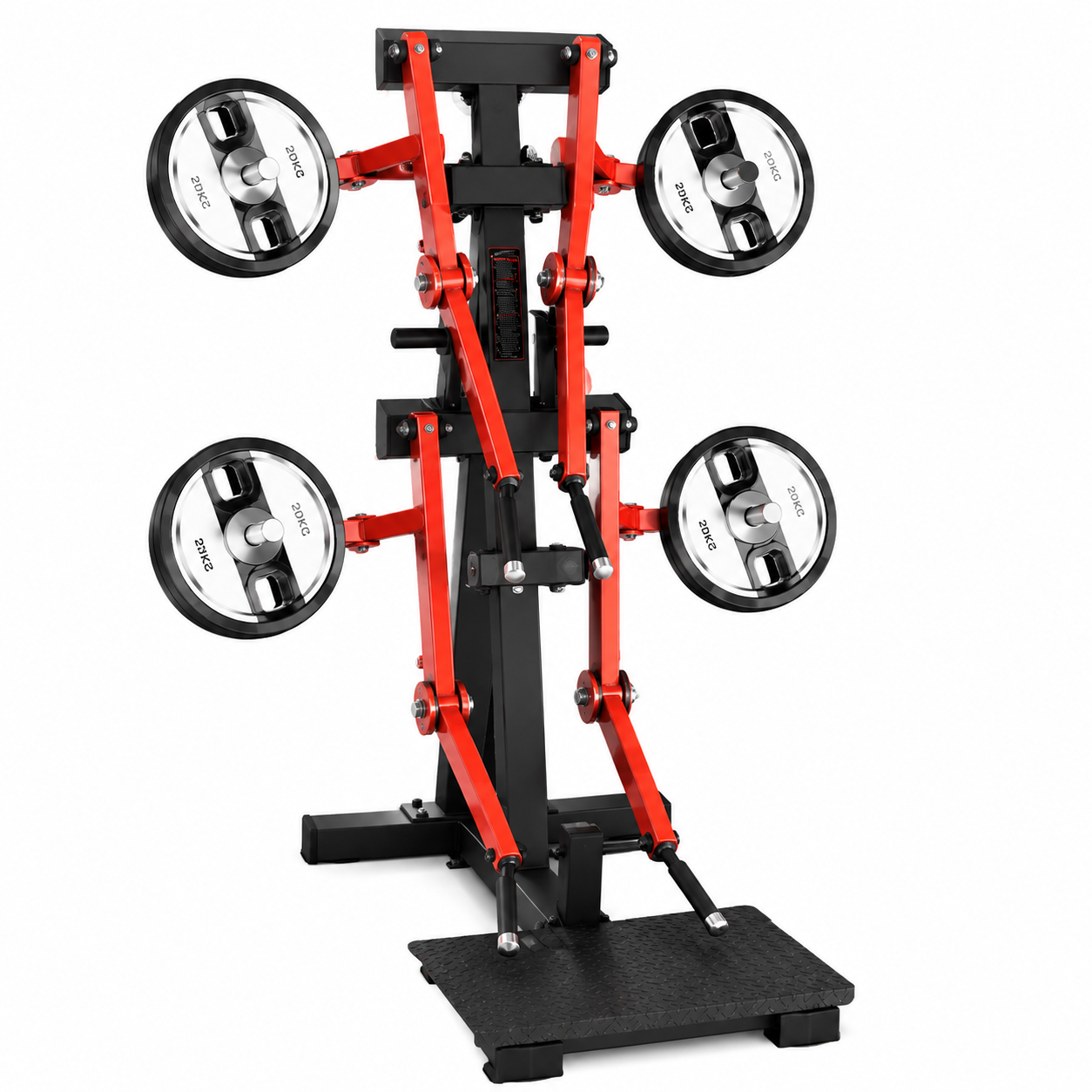
Material science fundamentally separates professional machines from household models. The underlying frame dictates how much load a unit can safely manage. Professional facilities demand uncompromising rigidity to prevent catastrophic equipment failure under heavy weight.
Frame construction relies heavily on steel gauge thickness. Lower gauge numbers indicate thicker, stronger steel. Professional units universally feature 11-gauge steel frames. Manufacturers join these thick steel tubes using continuous welds. Continuous welding creates a unified structure highly resistant to torsion. Residential machines typically use thinner 14-gauge steel. Manufacturers often bolt these residential frames together rather than welding them. Bolted joints inevitably loosen over time when subjected to repetitive dynamic forces.
Structural Specification Summary
| Feature | Commercial Standard | Home Standard |
|---|---|---|
| Frame Material | 11-gauge steel | 14-gauge steel |
| Joint Construction | Continuous robotic welds | Bolted modular joints |
| Motor Type | Alternating Current (AC) | Direct Current (DC) |
| Target User Fit | 5th to 95th percentile | Static average user |
Drive systems represent another massive divergence in mechanical engineering. Cardio machines highlight this difference perfectly. Professional treadmills employ robust Alternating Current (AC) motors. AC motors lack internal brushes, allowing them to run continuously without overheating. They maintain torque seamlessly even under heavy footfalls. Residential units almost exclusively use Direct Current (DC) motors. DC motors rely on internal brushes generating significant friction and heat. Pushing a DC motor beyond an hour of continuous use accelerates thermal degradation.
Biomechanics and adjustability further distinguish the two equipment tiers. Professional units must safely accommodate vastly different body types consecutively. Engineers design these machines for the 5th percentile female up to the 95th percentile male. They incorporate precise, counterbalanced adjustment points. This ensures proper joint alignment for nearly anyone walking through the doors. Residential units often scale to a single static average user. They feature fewer adjustment points, potentially forcing taller or shorter users into compromised biomechanical positions.
You cannot simply drop professional machines into a standard spare bedroom. Upgrading your space requires careful architectural and electrical planning. The physical footprint alone often shocks buyers accustomed to folding consumer models.
Spatial economics dictate how you arrange your facility. Professional machines rarely feature folding mechanisms. Folding designs introduce structural weak points unacceptable in public settings. Furthermore, commercial environments face rigid ADA compliance regulations. You must maintain specific clear floor spaces around each machine. Contrast this reality against compact fitness equipment. Compact units intentionally save space by combining multiple exercises into a highly condensed footprint.
Power delivery frequently derails poorly planned equipment installations. Professional cardio units draw massive amounts of electricity. Treadmills and stepmills often require dedicated 20-amp circuits. Many models strictly mandate 220V receptacles. A standard 15-amp household outlet will instantly trip when an AC motor draws peak current. You will likely need a licensed electrician to pull new wire and install NEMA-rated commercial receptacles.
Assuming standard household outlets can power professional AC motor treadmills.
Failing to measure entryways; many welded frames cannot fit through standard 32-inch doors.
Ignoring overhead clearance requirements for stepmills and functional trainers.
Flooring and structural load capacities present another invisible hurdle. High-end selectorized machines weigh hundreds of pounds before anyone even sits on them. Plate-loaded stations exert extreme point-loads onto the floor surface. You must install high-density vulcanized rubber sub-flooring. This flooring absorbs impact and protects the concrete or wood beneath. In residential settings, you must assess structural floor-load limits. Upper-level floors may require additional joist bracing to safely support professional-grade racks and weight stacks.
Legal definitions strictly govern how manufacturers honor equipment warranties. Understanding these binding clauses prevents devastating financial surprises. You must operate the machine within its explicitly defined legal environment.
Placing residential units inside any dues-paying facility instantly voids the manufacturer warranty. Companies trace serial numbers and require business names during service calls. If a consumer-grade cable snaps in your private studio, you absorb the entire liability. You must pay out-of-pocket for all replacement parts and labor. More importantly, using non-commercial equipment in a business setting severely jeopardizes your liability insurance. Insurers routinely deny claims if a member gets injured on a machine lacking proper commercial certification.
Maintenance schedules also differ drastically between the two categories. Professional units demand strict, documented preventive maintenance. Facility operators must regularly calibrate AC motors and track belt tensioning. You must lubricate guide rods and inspect Kevlar belts weekly. Proper upkeep prevents catastrophic failures during peak operating hours. Conversely, residential machines expect minimal intervention. Manufacturers design them for occasional silicone lubrication and simple wipe-downs.
Resale value remains a powerful consideration for any buyer. Professional equipment commands a significantly higher secondary market price. An 11-gauge steel frame maintains its structural integrity for decades. Heavy-duty units depreciate slowly, allowing gyms to recover substantial capital during equipment cycling. Residential equipment depreciates rapidly. Lighter components wear out quickly, rendering used household machines nearly valueless on the secondary market.
Selecting the correct machinery depends entirely on your specific environmental constraints. You must honestly evaluate your user volume and liability exposure. Using a structured decision matrix clarifies the purchasing process.
Facility owners and operators have no flexibility here. Purchasing professional-grade gear remains strictly non-negotiable. You must protect your business from debilitating injury lawsuits. Liability insurance policies explicitly require commercially rated machinery. Additionally, member retention depends heavily on equipment uptime. Broken machines generate immediate negative reviews. Heavy-duty construction guarantees your investment survives relentless daily punishment.
High-end residential buyers face a more nuanced decision. You should consider upgrading to commercial gym equipment under specific scenarios. Competitive powerlifters require equipment boasting 1,000+ lbs static load ratings. Natural bodybuilders need exact biomechanical alignment to prevent joint sheer. Large households also change the math. If four or more family members train daily, standard residential motors will burn out prematurely. Heavy household volume effectively mimics a light commercial environment.
Audit your electrical panel to confirm available breaker space for dedicated 20-amp circuits.
Measure your room dimensions and overlay strict ADA-compliant safety clearances.
Calculate your exact floor load capacity, especially for second-story installations.
Request specialized B2B pricing sheets from verified commercial distributors.
Navigating the equipment market requires separating aesthetic appeal from mechanical reality. The core difference ultimately comes down to cost-per-use over an extended timeline, rather than just the initial sticker price. Professional machines feature heavy-gauge steel, continuous welds, and AC motors engineered for endless repetition. Household models prioritize spatial efficiency, lighter materials, and cost-effective DC motors.
You must actively align your purchase directly with your expected daily user volume. Assess your facility infrastructure, including electrical capacities and floor load limits, before making any commitments. Never rely on visual similarities to gauge structural durability. We urge you to document your specific usage metrics clearly. Request a customized equipment audit or contact a specialized sales representative for a comprehensive facility layout consultation today.
A: Yes, many high-end users prefer professional gear at home. However, it requires careful preparation. You must assess your structural floor load limits to handle the extreme weight. Check your entry door widths, as welded frames rarely disassemble. You will also likely need costly electrical upgrades, including dedicated 20-amp, 220V circuits for cardio machines.
A: No. Using consumer-grade gear in any commercial setting instantly voids the manufacturer's warranty. It exposes your business to severe liability risks if a client suffers an injury. Residential machines lack the durability required for multi-client use and will degrade rapidly under the stress of continuous daily sessions.
A: Professional standards require immense structural rigidity. Commercial units typically start with 400+ lbs active user weight limits and boast static load capacities exceeding 1,000 lbs. Conversely, residential units frequently max out their safe operating limits around 250 to 300 lbs due to thinner steel frames and bolted joints.


